Parenting

Dr. M’s SPA Newsletter Volume 16 Issue 2 – School Food

School Based Nutrition – Why is it happening this way?

There is a quiet experiment happening in American childhood, and we should stop pretending it’s benign.

In the 1970s and 1980s, when I attended school, school food was far from perfect, but it existed in the context of something essential: it was mostly prepared on site, minimally processed (but changing in that direction) and not laden with additives and chemicals (Yet). Oh, and most children still ate meals prepared at home at almost every other occasion. Dinner wasn’t aspirational or Instagram-worthy, but it was routine. Real food. Cooked by someone who knew the child, at a table where nervous systems could downshift. School lunch was a supplement to that structure, not the metabolic foundation of a child’s life. That has all changed in a short 50 years. Mirroring the change in weight and childhood disease prevalence.

• 1970s – some processed foods begin to enter school cafeterias at scale
• 1980s – preservatives and additives become routine
• 1990s – ultra-processed foods dominate

In 1994, new standards were added: This table lays out how much of each food group schools were supposed to offer over a week under the 1994 standards. These were the first nutrition-focused meal standards the USDA put into place:

For Breakfast (all grades K–12):
Fruit: 2.5 cups/week
Vegetables: 0 cups/week
Grains/Bread: 0–10 oz equivalent/week (depending on combinations of grains and protein)
Meat/Meat-alternative: 0–10 oz equivalent/week
Milk: 5 cups/week

For Lunch (split by grade levels):
Fruit: K–3 also 2.5 cups; grades 4–12 get 3.75 cups/week
Vegetables: still 0 cups/week (no separate vegetable requirement yet)
Grains/Bread: at least 8 oz eq/week
Meat/Meat-alternative: 7.5 oz eq/week for breakfast; 10 oz eq/week for lunch
Milk: 5 cups/week

(Hopkins 2015)

What’s notable, reflected in the structure of this table, is that vegetables weren’t required at all yet, and the standards were very much food-group based, not ingredient-level nutrient quality checks. That created space for schools to rely on industrially produced entrées and sides that technically met volumes of grains or proteins but could still be ultra-processed products with long ingredient lists, many of these foods would meet a NOVA class 4 classification (the worst type). Think fruit cup in sugary syrup…..

Dr. M

Dr. M’s SPA Newsletter Volume 16 Issue 1 – Beyond Behaviors Part 3, Mona Delahooke, PhD

Screenshot

Chapter 3 – Individual Differences

Dr. Delahooke starts Chapter 3 by allowing Margaret Mead to remind us that each child is absolutely unique: “Always remember that you are absolutely unique. Just like everyone else.” This is more than a witty paradox, it is the hinge upon which all effective pediatric care swings. When we take individual differences seriously as neurobiological fact, we can finally stop confusing adaptive survival responses with defiance, stop labeling children as problems, and begin the real work of supporting the mind body systems that shape behavior from the inside out.

Let us review what we have learned in Beyond Behaviors so far – We are invited to descend below the waterline of the behavioral iceberg. What we see at the surface: the tantrum, withdrawal, rigidity, hyperactivity, the refusal to transition is merely a set of observable outputs from deeply personal internal variables. The sensory wiring, physiological states, immune triggers, thoughts, feelings, memories, and the child’s moment-to-moment sense of safety. Without diving into these subterranean layers, we risk treating smoke while ignoring the fire, which is the general state of current pediatric psychiatric medical therapeutics. We mostly treat the smoke. We don’t often ask about the fire. Her central thesis is simple, clinically robust, and profoundly humane:

Children behave according to the state of their nervous system, and their nervous system is shaped by individual biological, emotional, and sensory differences.

Once we understand this, behavior becomes not a moral test but a window into the child’s internal world…..

Dr. M

Dr. M’s Women and Children First Podcast #98 William Parker, PhD – Acetaminophen and Autism – What Do We Know in 2025?

Welcome to Dr. M’s Women & Children First Podcast, where we engage with pioneering voices at the intersection of science, healthcare, and the well-being of families.

Today, I’m honored to introduce Dr. William Parker, PhD. Dr. Parker is perhaps best known for discovering the function of the human appendix, but his contributions to science extend far beyond that single discovery. He studied biology and chemistry as an undergraduate before earning his PhD in Chemistry from the University of Nebraska–Lincoln in 1992. Since the 1980s, he has conducted innovative research, publishing more than 150 peer-reviewed articles that span immune function, microbiome science, and human health.

Dr. Parker was the first to compare immune systems in wild animals with those of their laboratory counterparts, and among the first to conclude that changes in the human “biota”, the symbiotic organisms living within us, brought on by modern society can contribute to depression and anxiety. After nearly three decades at Duke University, where he served as associate professor and research leader, he founded WPLab, Inc., a nonprofit dedicated to understanding and educating about the causes of chronic inflammatory diseases in high-income societies.

Currently a visiting scholar at the University of North Carolina, Dr. Parker collaborates widely with colleagues from Duke University, University of Montreal, Czech Academy of Sciences, University of Groningen, University of Colorado Boulder, and scientists across the pharmaceutical industry.

In recent years, he has turned his attention to a provocative and urgent question: the potential links between early acetaminophen exposure and autism spectrum outcomes. His current work combines mechanistic and epidemiologic approaches to explore how acetaminophen’s effects on human physiology at critical stages of development might influence neurodevelopment.

In our conversation, we’ll explore:

  • The evidence and hypotheses behind acetaminophen’s potential role in autism risk
  • What families and clinicians should know: what’s plausible, what remains speculative, and where research is heading next

I’m thrilled to share this episode with Dr. Parker, whose intellectual curiosity, scientific rigor, and courage to ask difficult questions embody the spirit of this show.

Dr. M

Dr. M’s SPA Newsletter Audiocast Volume 13 Issue 2

Food in Infants
What do we know?
“Humans are the only mammals who feed our young special complementary foods before weaning and we are the only primates that wean our young before they can forage independently. There appears to be a sensitive period in the first several months of life when infants readily accept a wide variety of tastes and this period overlaps with a critical window for oral tolerance.” (Borowitz S.) We do a deep dive here plus some information on the mineral calcium and a segment on loneliness.
Enjoy,
Dr. M

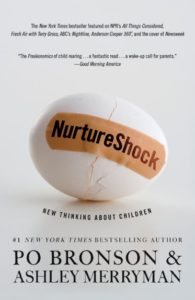
Dr. M’s Women and Children First Podcast #15 – Ashley Merryman, JD – Nurture Shock


Today’s guest is Ashley Merryman the best selling author of Nurture Shock. As a social science writer of distinction, she has written for Newsweek, Time, the New York Times, the Washington Post on various topics related to parenting and children. Her work has been cited as a research authority in 80 academic journals and 260 books, and it is being used as text in universities around the world.

Educational stops included a Bachelor of Fine Arts from the University of Southern California’s School of Cinematic Arts, a J.D. from the Georgetown University’s Law Center, and a Certificate in Irish Studies from Queen’s University, Belfast, Northern Ireland.

What she really is is a great speaker on the hard topics of science and social existence. This is a one hour journey through 2 major topics.

Please enjoy my conversation with Ashley Merryman,

Dr. M

Dr. M’s Women and Children First Podcast #4 – Ken Cook, the Environmental Working Group and Your Health

Ken Cook, President and co-founder of the Environmental Working Group, is widely recognized as one of the environmental community’s most prominent and influential critics of industrial agriculture, U.S. food and farm policy and the nation’s broken approach to protecting families and children from toxic substances. Under Cook’s guidance, the organization empowered American families with easy-to-use, data-driven tools to help reduce their exposure to potentially harmful ingredients in foods, drinking water, cosmetics and other household products. These unique digital resources are searched hundreds of millions of times by consumers. 
We discuss the state of the nation with regards to environmental triggers of disease which can cause problems in mothers and children. It is a conversation that every parent needs to hear as it is loaded with news to use for a healthier life.
Please enjoy my conversation with Ken Cook,
Dr. M
Here are two links to the podcast:
Apple Podcasts
Women and Children First
SPA Podcast Page – will be loaded this week

Dr. M’s SPA Newsletter Audiocast Volume 11 Issues 32 and 34

Majestic poplar

Newsletter #32 covers – School and the Covid Generation

More than a year later, as we had feared, we are starting to see and feel the repercussions of the school closure pandemic phenomenon. The K shaped recovery of the economic pandemic is also playing out similarly in the school system. Last year, private schools stayed open while public schools shuttered. Of those in public school systems, many that could afford one, hired tutors to bridge the academic dysfunction of zoom education. The gap between the rich and poor just widened like never before right before our eyes. Regardless of the intent behind the outcome, we are now here. It serves no purpose to blame teachers unions or local governments or parents living in fear or any other publicized reason to date. We are Americans and we must now roll up our sleeves and begin the process of bridging this gap again. These children deserve our total and unwavering support. Link to more….https://www.salisburypediatrics.com/patient-education/dr-magryta-s-newsletter/983-school-and-the-covid-generation

Newsletter #34 covers – Long Covid and its association with Epstein Barr Virus, EBV, reactivation

This is a very important topic for clinicians and parents to understand so we are going to look at it a little more deeply.
Long COVID or what appears to be a post infectious inflammatory issue may now be a consequence of another infection. What are the symptoms of long COVID and when do they occur? From the CDC: Some people are experiencing a range of new or ongoing symptoms that can last weeks or months after first being infected with the virus that causes COVID-19. Unlike some of the other types of post-COVID conditions that only tend to occur in people who have had severe illness, these symptoms can happen to anyone who has had COVID-19, even if the illness was mild, or if they had no initial symptoms. Symptoms can even begin weeks after the infection.  Link to more…. https://www.salisburypediatrics.com/patient-education/dr-magryta-s-newsletter/990-long-covid-and-its-association-with-epstein-barr-virus-ebv-reactivation

1 2 21