Infant/Toddler Pedcasts

Dr. M’s Women and Children First Podcast #49 – Marcel Nold, MD – Neonatal Immunology

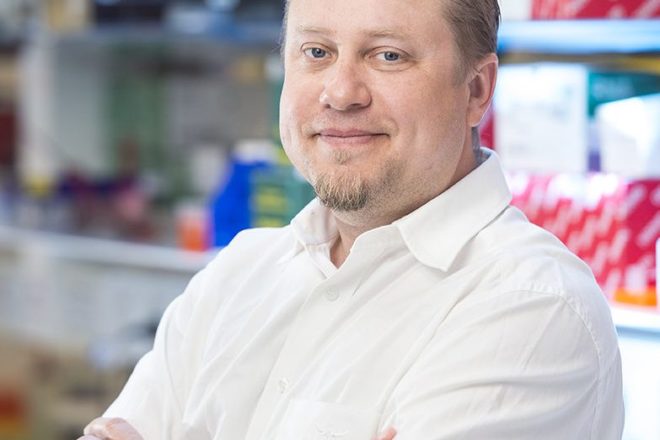
This weeks guest is Professor Marcel Nold, MD. Dr. Nold is a clinician scientist in the research environment of neonatal immunology and microbiomes at Monash University in the city of Monash in Melbourne, Australia. Professor Nold received his Doctor of Medicine degree at the JW Goethe-University at Frankfurt am Main, Germany, including final year rotations in Zürich (Switzerland), Montréal (Canada) and Capetown (South Africa). For his biomedical research training he spent six years at the Pharmazentrum at Frankfurt am Main and three years as a research Fellow at the laboratory of Professor Dinarello, at the University of Colorado Denver. In 2009 he was recruited to The Ritchie Centre in Melbourne and finished his specialist training at Monash Newborn. Professor Nold is a leading researcher worldwide in the field of immune cytokine signaling and was the key contributor to identifying Interleukin 37 or IL37. His research has been published in the journals Nature Immunology, Science Immunology and many others. His academic Inflammation in Neonatal Diseases Research Group and his industry programs aim to characterise underlying pathways of inflammation in early life diseases, with a focus on interventional immunology in cardiopulmonary and intestinal diseases of the preterm.
For the purposes of this interview, Dr. Nold is a researcher with a view of the maternal child dyad that is prevention focused and health span conscious. His research has led to many critical discoveries in the neonatal health space that I find deeply intriguing. We get into some deep immunology at times which is critical for total understanding.
Enjoy,
Dr. M

Dr. M’s SPA Newsletter Audiocast Volume 13 Issue 2

Food in Infants
What do we know?
“Humans are the only mammals who feed our young special complementary foods before weaning and we are the only primates that wean our young before they can forage independently. There appears to be a sensitive period in the first several months of life when infants readily accept a wide variety of tastes and this period overlaps with a critical window for oral tolerance.” (Borowitz S.) We do a deep dive here plus some information on the mineral calcium and a segment on loneliness.
Enjoy,
Dr. M

Dr. M’s SPA Newsletter Audiocast Volume 12 Issue 50

The fundamentals are these: Age related changes that lead to neuronal loss and cognitive decline are related to loss or reduction of myokine release, systemic inflammation, insulin resistance, reactive oxygen induced mitochondrial stress, DNA mutations and poor protein intake.
First, exercise releases chemicals called myokines which are cell signaling molecules that have the job of telling other cells what to do via changes in gene expression, protein transcription and much more. The prototypical change is the increase of a substance called brain derived neurotrophic factor, BDNF, for short. BDNF is critical for brain cell mitochondrial biogenesis. BDNF promotes many developmental functions in the brain, including neuronal cell survival, differentiation, migration, dendritic arborization, and synaptic plasticity. Regular exercise promotes a progressive increase in BDNF protein for up to at least 3 mo………
Enjoy,
Dr.M

Dr. M’s SPA Newsletter Audiocast Volume 12 Issue 48

This week we take a look at: Drug Induced Micronutrient Loss, Soleus Push Ups and Miror Neurons

To function at the highest and most optimal state requires providing our human engine with nutrients, both macro and micro types. By macro, I mean fats, carbohydrates and proteins. By micro, I mean minerals and vitamins which are cofactors for enzymatic activity driving the machine to normalcy of action whatever that action is. What dictates sufficiency? How do drugs disrupt this optimization success?
and much more…
Enjoy,
Dr. M

Dr. M’s Women and Children First Podcast #34 Stephan Guyenet, PhD – Childhood Obesity Part IV – Neuroscience of Food Choice

This week, I sit down with Dr. Stephan J. Guyenet, a neuroscientist, thinker and educator.  After earning a BS in biochemistry at the University of Virginia, he completed a PhD in neuroscience at the University of Washington, then went on to study the neuroscience of obesity and eating behavior as a postdoctoral fellow.  He has over 12 years of history in the neuroscience research world studying neurodegenerative disease and the neuroscience of body fatness.  His mission is to advance science and public health as a researcher, science consultant, and science communicator.  Publishing a book, The Hungry Brain, in 2017, he laid out the framework for understanding how our brains work with food. It was named one of the best books of the year by Publishers Weekly and called “essential” by the New York Times Book Review.

Finally, he is the founder and director of Red Pen Reviews, which publishes the most informative, consistent, and unbiased popular health and nutrition book reviews available.

This hour long conversation is very stimulating as we dive headlong into the upstream targets of food choice and body outcome.

Enjoy,

Dr. M

Dr. M’s SPA Newsletter Audiocast Volume 12 Issue 44

Medication errors are a major risk for morbidity and mortality nationally. The number affected skyrockets into the hundreds of thousands when we look at the countless side effects that do not cause death but leave us miserable and harmed.
When it comes to the children that we treat, physicians and care providers should refuse to give a medicine unless it is absolutely necessary. We explore these topics, a literature review and omega three fatty acids this week.
Enjoy,
Dr. M

Dr. M’s Women and Children First Podcast #31 – Dr. Sandra Hassink – Childhood Obesity

This weeks guest is Dr. Sandra Hassink, an expert in pediatric obesity.
Dr. Hassink has spent her career looking into the pathophysiology and social determinants of childhood obesity. Her career began at the Univeristy of Deleware where she studied Chemistry before heading off to Vanderbilt University to study medicine. After completing her training in Pediatrics at St Christopher’s Hospital in Philadelphia, Dr. Hassink began a long trailblazing road to treating childhood obesity, starting a weight management clinic in 1988 at Alfred I. duPont Children’s Hospital in Delaware well before most pediatricians even realized there was an issue to address.
She is now internationally recognized as an expert in childhood obesity prevention, testifying before Congress and serving as chair of the Delaware Governor’s council on Health Promotion and Disease Prevention and directing the AAP Institute for Healthy Childhood Weight. She has served as the president of the American Academy of Pediatrics, chaired the AAP Obesity Leadership Workgroup, the AAP Institute for Healthy Childhood Weight Advisory Committee, and the AAP Strategic Planning Committee. Dr.  Hassink is the chair of the Institute for Medicaid Innovation Child and Adolescent Subcommittee and a member of the  National Advisory Board. She authored numerous articles for parents and pediatricians and two books: “Pediatric Obesity: Prevention, Intervention, and Treatment Strategies for Primary Care” and “A Clinical Guide to Pediatric Weight Management.”
In a word, she is a teacher.
Today, we have the privilege of learning.
Dr. M

1 … 4 5 6 … 57