
Podcast: Play in new window | Download
Welcome back to Dr. M’s Women and Children First.
One of the recurring themes on this podcast is that the future of medicine won’t be discovered through faster-paced healthcare alone. It will be discovered by slowing down, listening more carefully, and embracing a patient-centered approach that seeks to understand the whole person—not just the disease. Ultimately, the future of medicine begins with a better question: How do we truly hear a patient’s story so that we can better serve the person sitting in front of us?
Today’s guest has spent his entire career helping answer that question.
Our conversation today centers on one of the most overlooked aspects of healing: why so many people struggle to begin the healing process in the first place—and more importantly, how we, as clinicians, parents, and patients, can help that process finally move forward.
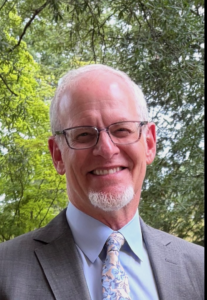
Dr. Russell Greenfield is a board-certified emergency medicine physician and a Diplomate of the American College of Lifestyle Medicine whose career has been dedicated to transforming healthcare from a disease-centered model into one focused on whole-person health. He has served as Medical Director of Integrative Medicine for major health systems, including Novant Health and the Weisiger Cancer Institute, held national leadership positions within the Veterans Health Administration’s Whole Health Initiative, and continues to advise organizations across the country that are reimagining what healthcare can become.
What makes Dr. Greenfield’s journey especially unique is that he was one of the select physicians chosen to complete a residential fellowship under the mentorship of Dr. Andrew Weil at the University of Arizona—the birthplace of academic integrative medicine. At a time when very few physicians were willing to challenge the traditional boundaries of healthcare, Dr. Greenfield immersed himself in a model that recognized nutrition, movement, sleep, stress, relationships, purpose, and environment as fundamental pillars of health, while embracing the remarkable advances of modern medical science.
For me, this conversation is especially meaningful because many of us in medicine are asking the same question: How do we move upstream? How do we stop waiting for chronic disease to develop and instead create the conditions where health can flourish?
Today we’ll explore the art of becoming an experienced listener in service of the patient before us. We’ll discuss why curiosity often matters more than certainty, why healing frequently begins long before the prescription pad comes out, and how understanding a person’s story can unlock opportunities that laboratory tests and imaging studies alone may never reveal.
Whether you’re a clinician, a parent, or simply someone searching for a deeper understanding of health, I think you’ll come away from this conversation with a renewed appreciation for one of medicine’s most powerful tools: listening.
Enjoy,
Dr. M