podcast

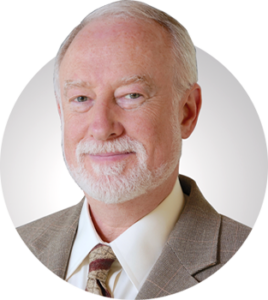
Dr. M’s Women and Children First Podcast #69 Repost – Stephen Porges, Ph.D. – Polyvagal Theory


This week I sit down with Dr. Stephen Porges, a Distinguished University Scientist at Indiana University where he is the founding director of the Traumatic Stress Research Consortium. He is Professor of Psychiatry at the University of North Carolina, and Professor Emeritus at both the University of Illinois at Chicago and the University of Maryland.

He served as president of the Society for Psychophysiological Research and the Federation of Associations in Behavioral & Brain Sciences and is a former recipient of a National Institute of Mental Health Research Scientist Development Award. He has published more than 400 peer-reviewed papers across several disciplines including anesthesiology, biomedical engineering, critical care medicine, ergonomics, exercise physiology, gerontology, neurology, neuroscience, obstetrics, pediatrics, psychiatry, psychology, psychometrics, space medicine, and substance abuse. In 1994 he proposed the Polyvagal Theory, a theory that links the evolution of the mammalian autonomic nervous system to social behavior and emphasizes the importance of physiological state in the expression of behavioral problems and psychiatric disorders. The theory is leading to innovative treatments based on insights into the mechanisms mediating symptoms observed in several behavioral, psychiatric, and physical disorders.

He is the author of multiple books on his Polyvagal Theory: including the Neurophysiological foundations of Emotions, Attachment, Communication, and Self-regulation, as well as Polyvagal Safety: Attachment, Communication, Self-Regulation. His newest book cowritten with his son is called Our Polyvagal World, How Safety and Trauma Change Us. Dr. Porges is the creator of a music-based intervention, the Safe and Sound Protocol ™ (SSP), which is used by therapists to improve social engagement, language processing, and state regulation, as well as to reduce hearing sensitivities.

This is such a fascinating conversation. He brings the worlds of psychiatry and anthropological physiology into union for us to understand the why of trauma reactions and the future unwinding that is now possible. This is a must listen to conversation if you know anyone with trauma history.

Please enjoy my conversation with Professor Porges,
Dr. M
Dr. M’s Women and Children First Podcast #103: Sam Yanuck, DC – Cogence

Today on Dr. M’s Women and Children First, we’re joined by Dr. Sam Yanuck, a clinician-educator who has spent more than three decades translating immunology from the bench to the bedside. Dr. Yanuck has been in private practice since 1992 and is the creator of Cogence Immunology, one of the most widely respected functional immunology training programs in the world. Through Cogence, he has trained over 9,900 clinicians internationally to think mechanistically about immune signaling, chronic inflammation, autoimmunity, and the complex, often nonlinear patterns that define chronic disease.

What sets Dr. Yanuck apart is his insistence on precision. His work focuses on understanding the immune system as a dynamic network—one shaped by timing, context, feedback loops, and individual biology—rather than a collection of isolated lab values or diagnoses. In his clinical model, chronic illness is not random; it reflects an identifiable matrix of immune, metabolic, environmental, and regulatory factors that can be mapped, understood, and addressed.

In today’s conversation, we’ll explore how modern immunology reshapes clinical thinking around autoimmunity, chronic inflammatory disease, and long-term health—especially in complex patients where standard frameworks fall short.
This is a deep dive. If you care about mechanism, signal over noise, and treating patients with both scientific rigor and biological humility, this episode is for you.

Today, we’re stepping outside the sterile lab and into the wild world of evolutionary biology — where our immune system didn’t emerge in a vacuum, but in dirt, in danger, and in the delicate dance between microbe and mammal.

Join me and Dr. Sam Yanuck -the clinician, the teacher, and one of the best translators of complex immunology into something both clinically useful and biologically beautiful.

Dr. M

Dr. M’s Women and Children First Podcast #102: Jeremy Goldberg – Life Begins


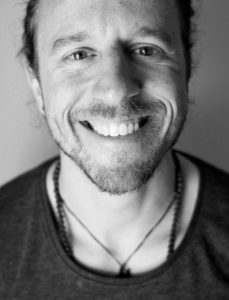
This weeks Guest is Dr. Jeremy Goldberg. He styles himself as a compassion cultivating day making change agent/empathy collecting not quitting word wizard/chief burrito appreciator aspiring to inspire/struggle overcoming ranter in charge/ferocious idealist/never giver upper/a love bombing kindness pirate. What he really does, in my mind, is write and teach the world to project love and kindness where it is not layered enough. On his website he writes: My mission is to make kindness cool, empathy popular, and compassion commonplace. As part of that purpose, I write articles, send emails, host retreats and workshops, give TEDx talks, coach clients, host a podcast, write books, and make spoken word poetry videos. My name is Jeremy, I founded Long Distance Love Bombs, and I am fucking stoked to meet you. Send me an email and let’s get going: LongDistanceLoveBombs at gmail dot com. We breakdown words, relationship, connection and being happy in a world of silly tribal divisiveness!

In this conversation we discuss his experience as a new father and the initiation of fatherhood. “I have been wiped out and annihilated by parenting and the initiation of fatherhood. Hands down, brutally, face dragged along the hot coals of the initiation….” There are so many real, honest, open truths dropped along the winding road of this discussion. If you are young and ready to understand the world of fatherhood, this is a conversation for you!

Dr. M

Dr. M’s Women and Children First Podcast #101: Sandy Newmark, MD; Elisa Song, MD; Leslie Stone, MD – Autism Etiology?

Today’s conversation takes us upstream—to the source—of one of the most pressing and emotionally charged topics in modern pediatrics: the rise in autism spectrum disorders. Autism rates have continued to climb in 2025, but what if much of what we call “the epidemic” isn’t simply genetics or better diagnosis, but a reflection of deeper biological, environmental, and developmental changes affecting the human organism before birth?

To explore this critical question, I’m joined by three extraordinary clinicians who have dedicated their lives to understanding the roots of children’s health and disease.

Dr. Sandy Newmark, Clinical Professor of Pediatrics at the Osher Center for Integrative Medicine at UCSF, has spent the past two decades at the intersection of conventional and integrative medicine—focusing specifically on children with autism and ADHD. His approach blends deep compassion with scientific rigor, examining how nutrition, toxins, inflammation, and the microbiome shape the developing brain.

Dr. Elisa Song, Stanford-, NYU-, and UCSF-trained integrative pediatrician and author of Healthy Kids, Happy Kids, is one of the leading global voices in pediatric functional medicine. As founder and Chief Medical Officer of Healthy Kids Happy Kids and Tiny Health, she’s pioneering microbiome-centered strategies to reverse chronic disease in children and reshape how we think about wellness from the inside out.

Dr. Leslie Stone, family physician, obstetrician, and co-founder of GrowBabyHealth.com, brings a lifetime of experience delivering and caring for over 5,000 babies. Her groundbreaking work in the science of Developmental Origins of Health and Disease—the DOHaD model—shows how what happens before and during pregnancy programs a child’s long-term health, resilience, and risk for conditions like autism.

Together, we’ll discuss the emerging evidence that the autism epidemic is not a mystery of genetics alone, but a story written in inflammation, metabolic disruption, environmental exposures, and the developmental stressors of modern life. We’ll explore how integrative and functional medicine are reframing prevention—not just treatment—and what it will take to truly turn the tide for the next generation.

This is a conversation about hope, science, and the possibility of rewriting the future—one mother, one child, and one generation at a time.

Dr. M’s Women and Children First Podcast #100 Wayne Koontz, MD – Vaccines and Disease over 50 years

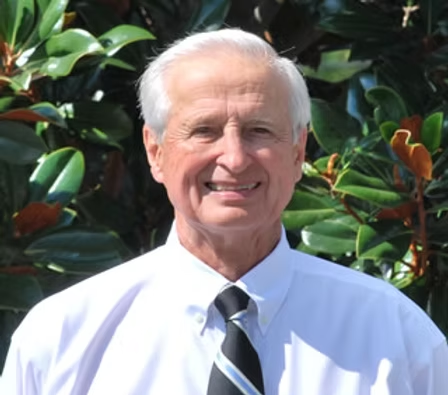
Today on Dr. M’s Women and Children First Podcast, we welcome Dr. Wayne Koontz, a founding partner at Salisbury Pediatric Associates in Salisbury North Carolina, where he has spent over 5 decades caring for generations of families with compassion, wisdom, and a deep commitment to community health.

Dr. Koontz earned his Undergraduate degree and his Doctor of Medicine from Wake Forest University, where his early love of science and service began to take shape. He went on to complete his pediatric residency at Dallas Children’s Medical Center, part of the University of Texas Southwestern Medical School, where he received outstanding training in both academic and clinical pediatrics.

As one of the founding physicians at Salisbury Pediatrics, Dr. Koontz helped to build a model of child-centered, family-oriented care that has served the Rowan County. His commitment to children’s well-being extends beyond the clinic, reflecting a lifelong dedication to preventive medicine, developmental health, and the nurturing of strong physician–family relationships.

It’s an honor to have Dr. Koontz with us today to share his clinical insights as they relate to infection and vaccination from a longevity based pediatric career. Dr. Koontz has a unique perspective to share as his 50 plus years of experience cover the prevaccine infectious disease based practice of pediatric medicine all the way to the current vaccine centric and reduced infectious disease burden reality. That is a timeline worthy of exploration.

So lets explore.

Dr. M

Dr. M’s Women and Children First Podcast #99 Liz Mumper, MD – Kids and Covid

Welcome to Dr. M’s Women & Children First Podcast, where we engage with pioneering voices at the intersection of science, healthcare, and the well-being of families.

Today on Dr. M’s Women and Children First, we welcome Dr. Elizabeth Mumper, a physician, educator, and thought leader whose career has profoundly influenced the practice of integrative pediatrics.

Dr. Mumper earned her Bachelor of Science degree from Bridgewater College, graduating magna cum laude, before attending the Virginia Commonwealth University School of Medicine, where she received her medical degree. She completed her pediatric residency at the University of Virginia and served as Chief Resident in Pediatrics. She remained at UVA as an Associate Professor of Clinical Pediatrics from 1997 to 2005, mentoring future physicians and advancing holistic, evidence-based approaches to child health.

Following her time in academia, Dr. Mumper founded The Rimland Center for Integrative Medicine in Lynchburg, Virginia, a clinic dedicated to children with autism spectrum disorders, PANS/PANDAS, allergies, and complex chronic illnesses. Her practice integrates the best of conventional pediatrics with biomedical and functional medicine principles, always guided by compassion and curiosity.

She has been a leading educator with the Medical Academy of Pediatric Special Needs (MAPS) and a frequent international lecturer, teaching clinicians how to recognize and treat the root causes of immune dysregulation, inflammation, and neurodevelopmental challenges.

Dr. Mumper is also the author of the new book Kids and COVID, an insightful exploration of how the pandemic impacted children, physically, emotionally, and developmentally, and what lessons medicine must learn moving forward. In our conversation, we discuss her book in depth, as well as the broader implications of the COVID-19 pandemic for pediatric care, resilience, and future public health policy.

Finally, we dive into the complex topic of vaccines, considering what we’ve learned from the pandemic years and expanding the conversation begun with Dr. Paul Offit and Dr. Joel Warsh.

Dr. Mumper’s lifelong dedication to children, her fearless pursuit of truth, and her balanced, science-driven voice make her one of the most respected figures in functional medicine.

Please join me in welcoming my friend and colleague,  Dr. Elizabeth Mumper.

Dr. M

Dr. M’s Women and Children First Podcast #98 William Parker, PhD – Acetaminophen and Autism – What Do We Know in 2025?

Welcome to Dr. M’s Women & Children First Podcast, where we engage with pioneering voices at the intersection of science, healthcare, and the well-being of families.

Today, I’m honored to introduce Dr. William Parker, PhD. Dr. Parker is perhaps best known for discovering the function of the human appendix, but his contributions to science extend far beyond that single discovery. He studied biology and chemistry as an undergraduate before earning his PhD in Chemistry from the University of Nebraska–Lincoln in 1992. Since the 1980s, he has conducted innovative research, publishing more than 150 peer-reviewed articles that span immune function, microbiome science, and human health.

Dr. Parker was the first to compare immune systems in wild animals with those of their laboratory counterparts, and among the first to conclude that changes in the human “biota”, the symbiotic organisms living within us, brought on by modern society can contribute to depression and anxiety. After nearly three decades at Duke University, where he served as associate professor and research leader, he founded WPLab, Inc., a nonprofit dedicated to understanding and educating about the causes of chronic inflammatory diseases in high-income societies.

Currently a visiting scholar at the University of North Carolina, Dr. Parker collaborates widely with colleagues from Duke University, University of Montreal, Czech Academy of Sciences, University of Groningen, University of Colorado Boulder, and scientists across the pharmaceutical industry.

In recent years, he has turned his attention to a provocative and urgent question: the potential links between early acetaminophen exposure and autism spectrum outcomes. His current work combines mechanistic and epidemiologic approaches to explore how acetaminophen’s effects on human physiology at critical stages of development might influence neurodevelopment.

In our conversation, we’ll explore:

  • The evidence and hypotheses behind acetaminophen’s potential role in autism risk
  • What families and clinicians should know: what’s plausible, what remains speculative, and where research is heading next

I’m thrilled to share this episode with Dr. Parker, whose intellectual curiosity, scientific rigor, and courage to ask difficult questions embody the spirit of this show.

Dr. M