podcast

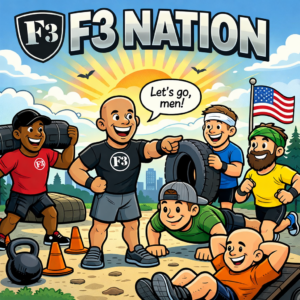
Dr. M’s Women and Children First Podcast #110: F3 Nation and Fatherhood


Welcome to Dr. M’s Women and Children First Podcast. Today’s conversation is a little different.

Six men. One table. No scripts.

Just a shared commitment to something that doesn’t come with a manual—fatherhood.

We’re talking about what it means to show up as a dad when you’re tired, when you’re stretched thin, and when the stakes feel higher than anything else you do.

And we’re grounding that conversation in the ethos of F3 Nation—fitness, fellowship, and faith—where men gather early, push each other physically, and, more importantly, build something deeper: accountability, purpose, and community.
Because strong fathers don’t happen by accident. They’re forged—day by day, rep by rep, conversation by conversation.

Let’s get into it.
Dr. M

Dr. M’s Women and Children First Podcast #109: Nutrition, Epigenetic Change and Childhood Disease


Nothing in biology is random.
Not growth.
Not metabolism.
Not disease.
What we will explore today is the reality that the earliest inputs in life: nutrition, environment, signaling,
don’t just influence outcomes…
They shape them.
They write the first draft.
And if you understand that, if you truly let that land,
then everything about how we approach pregnancy, childhood, and prevention begins to shift.
From reaction…to intention.
From downstream management…to upstream design.

Why This Conversation Matters
This episode is not just another discussion.
In many ways, it is ground zero.
Because if you don’t understand this layer, the imprinting, the epigenetic programming, the responsiveness of biology to environment, then everything that follows in this podcast…becomes harder to fully see.
But once you do see it, the picture sharpens.
You begin to understand:why trajectories diverge early, why children present so differently and why the same diagnosis can have completely different roots.

This is the beginning of a new map.
And maps matter.

Gratitude to Today’s Guests
I want to take a moment to acknowledge the voices you heard today—because this kind of thinking doesn’t happen by accident.

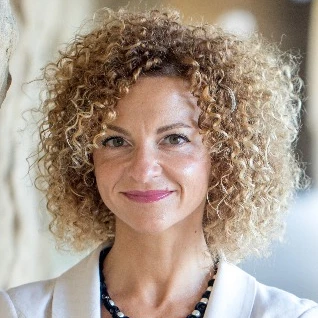
Lucia Aronica
Dr. Aronica is a Stanford scientist and a global authority in nutritional epigenetics, helping clinicians understand that food is not simply fuel—it is biological information that actively programs gene expression.

She created Stanford’s first courses in nutritional epigenetics and pioneered the Epinutrition framework, a clinical model that reframes nutrition as signaling, not supplementation.

You may recognize her from the Netflix documentary You Are What You Eat: A Twin Experiment, and she is now launching the world’s first Clinical Epinutrition Certification, training health professionals to use food as epigenetic medicine.

Emily Stone Rydbom
Emily is a clinical nutritionist, researcher, and digital health founder working at the frontier of precision maternal nutrition.

As Founder and CEO of GrowBaby Health, and through her work with GrowHealth Technologies, she is building AI-enabled systems that integrate nutrition directly into standard obstetric care. With over 14 years of clinical experience, she has helped pioneer the “Standard of Care PLUS” model, demonstrating meaningful reductions in preterm birth and gestational diabetes in high-risk populations.

She is also a co-investigator on the ROOT Study—bringing this work directly into real-world maternal care here in North Carolina.

Samantha N. Fessler
Dr. Fessler brings a deep scientific lens to the intersection of metabolism, inflammation, and perinatal nutrition.
With a PhD in Exercise and Nutritional Sciences from Arizona State University, her work has focused on how nutritional strategies can modulate the interplay between immune signaling and metabolic function to improve outcomes for mothers and children.

As Director of Scientific Affairs at Needed, she helps translate rigorous science into actionable, evidence-based approaches that clinicians and families can actually use.

Randy L. Jirtle
And finally, Dr. Randy Jirtle—joining us again—whose work, quite simply, changed how we understand biology.
A pioneer in epigenetics and genomic imprinting, Dr. Jirtle’s research on the agouti mouse model demonstrated for the first time that environmental inputs—particularly nutrition and chemical exposure—could directly alter gene expression across generations. His work reframed the gene from a fixed sentence…to a responsive system.

In fact, Time Magazine once described it this way:“A gene represents less of an inexorable sentence and more of an access point for the environment to modify the genome.”

He is a Professor of Epigenetics at North Carolina State University and Senior Scientist at University of Wisconsin–Madison and remains, at his core, a deeply curious thinker.

And that curiosity… is what moved this field forward.

Final Thought: If there is one takeaway from today, it is this: The environment is not acting on the child. The child is responding to the environment.

And that response…is being written into biology.

Dr. M

Dr. M’s Women and Children First Podcast #108: Halie Hauser – Storytime

Screenshot


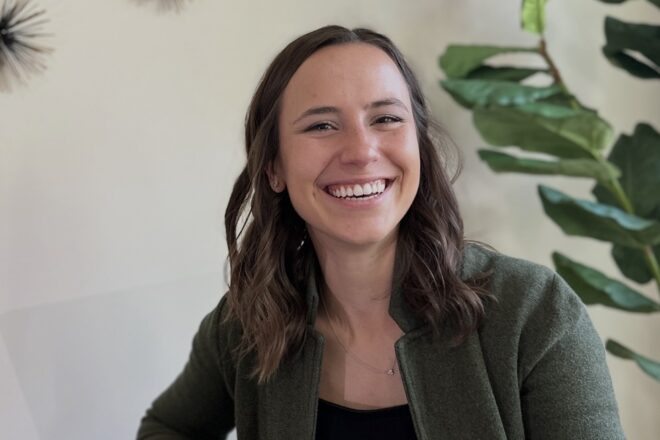
On today’s episode of Dr. M’s Women and Children First Podcast, we welcome Halie Hauser, a pediatric clinician, storyteller, and quiet architect of early childhood connection.

Halie is the creator of Storytime Explorers, a storytelling platform designed for toddlers and preschoolers that sits at the intersection of language, emotion, and human development. With a Doctor of Nursing Practice focused on pediatric primary care, she brings both clinical depth and creative intuition to the way she reaches children—and just as importantly, their parents.
\
Her work lives in the small moments: friendship struggles, big feelings, daily routines, the courage to try again. The ordinary terrain of childhood—where, if we’re paying attention, the most important wiring is happening.

Halie understands something we often forget in modern pediatrics: before a child can regulate, they must feel safe; before they can learn, they must feel connected; and before they can speak, they must be spoken to in a language that meets them where they are.

Through storytelling, she’s building that bridge.

This is a conversation about early brain development, emotional scaffolding, the power of narrative in shaping behavior—and how something as simple as a story can become a tool for resilience, attachment, and lifelong learning.

Dr. M

Dr. M’s Women and Children First Podcast #107: Sundeep Dugar, PhD – Drug Discovery


On today’s episode of Dr. M’s Women and Children First Podcast, we welcome a scientist whose work has quietly shaped the cardiovascular health of millions around the world.

Dr. Sundeep Dugar is a pharmaceutical innovator, inventor, and industry leader with more than three decades at the forefront of drug discovery. He is best known as a co-inventor of ezetimibe — marketed as Zetia® — a landmark cholesterol-lowering medication that transformed lipid management by targeting intestinal cholesterol absorption. He also co-inventor of the combination therapy Vytorin® (ezetimibe plus simvastatin), expanding treatment options for patients at high cardiovascular risk. For this groundbreaking work, Dr. Dugar and his colleagues received the prestigious 2005 National Inventor of the Year Award from the Intellectual Property Owners Association and the Heroes of Chemistry award from the American Chemical Society. Across his career, Dr. Dugar has contributed to more than 140 patents and has authored over 70 scientific publications, reflecting a lifetime devoted to translating chemistry into real-world therapies.

He is currently the founder of Aayam Therapeutics, where he leads efforts to develop innovative, accessible medicines through collaborative global research. He also serves as Co-Chief Executive Officer of Blue Oak Nutraceuticals, advancing a novel mitochondrial-targeted compound known as Mitokatlyst™, designed to stimulate mitochondrial biogenesis and cellular energy — with potential implications for muscle strength, metabolic health, cardiovascular function, and inflammation. He is the first one to decipher the mechanism by which exercise induces mitochondria levels. Mitokatlyst mechanism of action mimics this process.

Dr. Dugar’s scientific journey spans continents and some of the world’s premier institutions. He earned both his Bachelor’s and Master’s degrees in Organic Chemistry from the University of Delhi, completed his PhD in Chemistry at the University of California, Davis, and pursued postdoctoral research at ETH Zürich in Switzerland and at Cornell University.
Today, we’ll explore the story behind major pharmaceutical breakthroughs, the science of mitochondrial health, and what the future of therapeutics may look like when innovation meets global accessibility.

Please join me in welcoming Dr. Sundeep Dugar.

Dr. M’s Women and Children First Podcast #106: Nayan Patel, PharmD – Glutathione


Welcome back to Dr. M’s Women and Children Firsts Podcast. Today’s conversation sits at the crossroads of chemistry, skepticism, and clinical innovation.

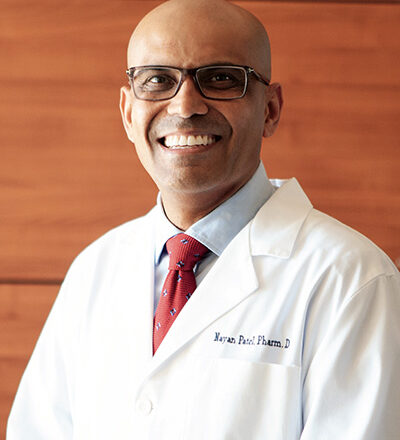
Our guest is Nayan Patel, a pharmacist with more than three decades inside the world of drug formulation and delivery. He is an alumnus of the University of Southern California School of Pharmacy, where he now serves as adjunct faculty, teaching advanced biochemistry and compounding science. Over the years, he has become an international educator on one molecule that refuses to stay quiet: glutathione.

Dr. Patel is the founder of Auro Wellness, launched in 2011 with a specific mission—stabilize glutathione and solve its delivery problem. His work led to the development of the Auro GSH™ Antioxidant Delivery System, a topical approach designed to improve absorption of this notoriously fragile molecule. He is also the author of The Glutathione Revolution, a deep dive into how glutathione influences detoxification, aging, energy production, and immune resilience.

If you’ve spent time in integrative medicine, you’ve heard glutathione called the “master antioxidant.” That phrase can sound like marketing, but the biology is real. Glutathione is a three–amino acid peptide central to redox balance, mitochondrial function, immune signaling, and cellular survival. It does not just neutralize oxidative stress; it regulates how cells respond to it.

The challenge is delivery. Oral glutathione is largely broken down in the gut. IV glutathione works, but it’s impractical for most families. Precursors like NAC depend on intact metabolic pathways that may not be operating optimally in states of chronic stress or inflammation.
Dr. Patel asked a disruptive question: what if the bottleneck isn’t production—but delivery?

Today we unpack the science and the skepticism around transdermal glutathione. Can a molecule like this meaningfully cross the skin barrier? What does stabilization actually require? And how does independent pharmaceutical innovation differ from traditional drug development pathways, which are often constrained by economics as much as biology?

For those of us caring for women and children—where oxidative stress, immune dysregulation, mitochondrial strain, and toxic burden intersect in everything from complicated pregnancies to neurodevelopmental challenges—this conversation matters. Not as a silver bullet. Not as a miracle spray. But as an exploration of foundational physiology and thoughtful delivery science.

This is a discussion about how molecules move, how systems adapt, and how asking better questions can reshape clinical practice.
Let’s dive in.

Dr. M

Auro Wellness

Dr. M’s Women and Children First Podcast #105: Carrie Jones, ND – Hormone Literacy

Dr. Carrie Jones, ND, MPH

Hormone Literacy

Welcome back to Dr. M’s Women and Children First, where we step back from symptoms and ask a more interesting question: how does the female hormonal system actually develop, adapt, and sometimes struggle across a lifetime?

Today’s conversation spans that entire arc, from early life, to puberty, to fertility and more with someone who has spent more than two decades living inside that complexity.

My guest is Dr. Carrie Jones, an internationally recognized speaker, consultant, author, and educator in women’s health and hormones. Many know her as the “Queen of Hormones,” but what really defines her work is not titles, it’s her ability to translate very complex endocrinology into biology that actually makes sense.

Dr. Jones is a naturopathic physician who completed a two-year residency focused on women’s health and endocrinology. She holds a Master of Public Health, was one of the very first clinicians to become board certified through the American Board of Naturopathic Endocrinology, and is a Menopause Society Certified Practitioner.
She helped shape how an entire generation of clinicians think about hormone testing and interpretation as the first Medical Director at Precision Analytical, the creators of the DUTCH test, and later as the first Head of Medical Education at Rupa Health. She’s served on Under Armour’s Human Performance Council, consulted for multiple women’s health and laboratory companies, and now serves as Chief Medical Officer at NuEthix Formulations.

Many of you will recognize her voice from the Root Cause Medicine Podcast, which reached more than ten million downloads, and she now hosts her own show, Hello, Hormones, where she continues to explore how hormones shape mood, metabolism, immunity, fertility, and aging.

But what makes today’s conversation especially important is this: we’re not just talking about menopause, or cycles, or lab values.

We’re asking a bigger question.

How have female hormones changed across generations?

How early life nutrition, stress, environment, and metabolic health shape the hormonal story from birth forward.
And how modern exposures, from ultra-processed diets to endocrine-disrupting chemicals, may be quietly rewriting the biology of women long before symptoms ever appear.

This is a systems-level conversation about development, resilience, and adaptation, and few people are better equipped to guide us through it than Dr. Carrie Jones.

Dr. M

@dr.carriejones
@dr.carriejones
https://www.youtube.com/@drcarriejones


www.drcarriejones.com

Dr. M’s Women and Children First Podcast #104: Maeve O’Connor, MD – Allergy and Immune Literacy


Today, I’m joined by Dr. Maeve O’Connor, a board-certified allergist and immunologist practicing in Charlotte, North Carolina.
Dr. O’Connor’s training reflects both rigor and range. She completed dual undergraduate degrees at the University of South Carolina Honors College with a Bachelor of Science in Biology and a Bachelor of Arts in Spanish before earning her medical degree at the University of South Carolina School of Medicine. She then completed her internship and residency at the University of Texas and its affiliated hospitals in Houston, where she served as Chief Medical Resident.

Her subspecialty training in Allergy and Immunology was completed at the National Jewish Medical and Research Center in Denver consistently ranked the number one respiratory hospital in the United States where she developed deep expertise in asthma, allergic disease, and immune dysregulation. She further expanded her clinical lens through fellowship training in Integrative Medicine at the University of Arizona from 2013 to 2015.

Clinically, Dr. O’Connor works at the intersection of pediatrics, immunology, and real family life where eczema isn’t just a rash, food reactions aren’t just labels, and immune symptoms rarely fit neatly into algorithmic boxes. Her work emphasizes careful diagnosis, evidence-based treatment, and avoiding both over-medicalization and missed pathology.

In a time when allergy medicine is often reduced to test results and avoidance lists, Dr. O’Connor brings a grounded, thoughtful approach helping families and clinicians distinguish what’s truly allergic, what’s inflammatory, what’s developmental, and what’s simply noise.

Today, we’ll explore how allergic disease actually presents in children, why mislabeling is so common, how early immune signals shape long-term health, and how pediatricians and specialists can collaborate more effectively without fear-based medicine.

This is a conversation about immune literacy, clinical nuance, and doing better for children in a world where their immune systems are under increasing pressure.

I’m excited to welcome Dr. Maeve O’Connor.

Dr. M