anthropology

Dr. M’s Women and Children First Podcast #60 – Moshe Szyf, Ph.D. – Hope and Epigenetics Part 2

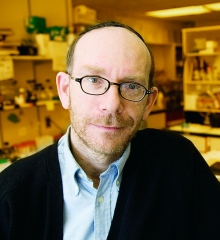
This week’s guest is Professor Moshe Szyf.
This is the second story of hope for us as a species. We have a level of control over our outcome that is baked into our DNA.
Dr. Moshe Szyf joins the show today to discuss the social programming of the epigenome. Dr. Szyf and his colleague Dr. Meaney proposed over two decades ago the first set of evidence that the “social environment” early in life can alter DNA methylation launching the emerging field of “social epigenetics”. He also has illustrated that DNA methylation is a prime therapeutic target in cancer and other diseases to be explored and potentially manipulated for health.
“Together, they discovered that our genetic code, the actual sequential structure of our DNA, can pretty much shrug off the influence of any external environmental factors, short of massive radiation. However, the expression of individual genes within that sequence can be permanently altered by such seemingly innocuous influences as diet or how others treat us. Once triggered, a group of molecules called a methyl group attaches itself to the control centre of a gene, permanently switching on or off the manufacture of proteins that are essential to the workings of every cell in our body. In most tumours, this DNA methylation pattern has been knocked awry, leading to a gene being completely deactivated or triggered to abnormally high activity.” (McGill Reporter)
Dr. Szyf received his Ph. D from the Hebrew University and did his postdoctoral fellowship in Genetics at Harvard Medical School before he joined the department of Pharmacology and Therapeutics at McGill University in Montreal, Canada. He currently holds the James McGill Professorship in Pharmacology. He is the founding co-director of the Sackler Institute for Epigenetics and Psychobiology at McGill and is a Fellow of the Canadian Institute for Advanced Research Experience-based Brain and Biological Development program. Szyf has been the founder of the first “Pharma” to develop epigenetic pharmacology “Methylgene Inc.” and the first journal in epigenetics “Epigenetics”.
Please enjoy my conversation with Dr. Moshe Szyf,
Enjoy,
Dr. M

Dr. M’s Women and Children First Podcast #58 – Mahmoud Ghannoum, Ph. D. – Microbiomes – Bacterial and Fungal

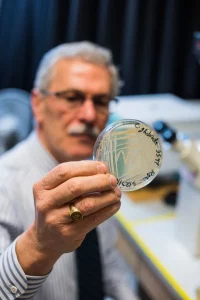
This week’s guest is Professor Mahmoud Ghannoum. For over four decades, Dr. Ghannoum has been exploring a critical but neglected inhabitant of the human body, the fungus. Born and raised in Lebanon, Dr Mahmoud Ghannoum is the current Director of the Center for Medical Mycology at Case Western Reserve University. He began his scientific journey at Loughborough University in England where he studied the fungus candida and its health associated diseases. Coupling this work to his curiosity about the whole area of intestinal microorganisms in the human body, he has become one of the leading researchers in the world in this space.
His discoveries include the knowledge that fungal organisms constitute an essential part of the microbiome. In fact, in 2010, Dr Ghannoum was the first scientist to identify over 100 native species of fungi in the oral cavity and that they are mostly friendly to us. Like with bacteria, there are good fungi as well as bad fungi. And just as it was startling to discover that we need positive bacteria in our guts, most people today are shocked to learn that their health depends on flourishing colonies of helpful fungi. Symbiosis in all things seems to be the flavor of the day and history has proven this to be what we should have always assumed.
He is widely published in top journals as well as being the founder and director of Biohm, a company dedicated to microbiome analysis and management from the perspective of fungal and bacterial communities. He is the author of Total Gut Health. This week, Dr. Ghannoum and I look critically at the microbiome of humans from the well trafficked bacterial road to the less travelled fungal road.
Enjoy,
Dr. M

Dr. M’s Women and Children First Podcast #53 – Peter Ungar, PhD – Teeth and History

This weeks guest is Dr. Peter Ungar. Dr. Ungar serves as Distinguished Professor of Anthropology and Director of the Environmental Dynamics PhD Program at the University of Arkansas. He received his PhD in Anthropological Sciences from Stony Brook University and taught Gross Anatomy in the medical schools at Johns Hopkins and Duke before joining the University of Arkansas faculty in 1995. He is an Honorary Research Fellow of the Center for the Exploration of the Deep Human Journey at the University of the Witwatersrand in Johannesburg, South Africa.
Ungar has written or coauthored more than 200 scientific works on ecology and evolution for journals like Science, Nature, Proceedings of the National Academy of Sciences, Scientific American, and more. His work has focused on teeth, food choices and feeding in living primates, and the role of diet and environmental change in the evolution of human ancestors and other fossil species.
We dive into the world of teeth, evolution and out current state of existence in modern society. Are our teeth matched for this environment?
Enjoy,
Dr. M

Dr. M’s Women and Children First Podcast #45 – Briana Pobiner PhD– Origins of Human Meat Consumption

Briana Pobiner PhD
This weeks guest is super interesting. Briana Pobiner is a paleoanthropologist whose research centers on the evolution of human diet with a focus on meat-eating. Briana has a BA from Bryn Mawr College, where she created her own major called Evolutionary Studies. Then she completed a Masters degree followed by her PhD in Anthropology from Rutgers University. Briana is also an Associate Research Professor of Anthropology in the Center for the Advanced Study of Human Paleobiology at the George Washington University.
She has done fieldwork in Kenya, Tanzania, South Africa, and Indonesia and has been supported in her research by the National Geographic Society, the National Science Foundation and the Society for American Archaeology. We discuss some of her favorite field moments including a run in with a white rhino as well as discovering fossil bones that were last touched, butchered and eaten by one of her 1.5-million-year-old ancestors. Since joining the Smithsonian in 2005 to help put together the Hall of Human Origins, in addition to continuing her active field, laboratory, and experimental research programs, she leads the Human Origins Program’s education and outreach efforts which includes managing the Human Origins Program’s public programs, website content, social media, and exhibition volunteer training. Briana has also more recently developed a research program in evolution education and science communication. She is the recipient of the 2021 American Association of Biological Anthropologists and Leakey Foundation Communication and Outreach Award in Honor of Camilla Smith, and a 2021 National Center for Science Education Friend of Darwin award.
Enjoy,
Dr. M