
Parenting Philosophy

Dr. M’s SPA Newsletter Volume 15 Issue 31 – Poly Vagal Theory, Stephen Porges, PhD

I think that this is an important time to pause and relook at Polyvagal Theory before continuing with Beyond Behaviors.

Polyvagal Theory: Current Status, Clinical Applications, and Future Directions (Porges, S. 2025)

“Social behavior and the capacity to manage challenge are dependent on the neural regulation of physiological state.” S. Porges


When I dove into Stephen Porges’s 2025 review of the Polyvagal Theory (PVT), I felt like I’d stepped into a crossroads where neurobiology, clinical practice, trauma science, and human experience collide. This paper isn’t merely a summary of three decades of work (all of which I have read); it’s a spirited defense of a paradigm that’s been both celebrated (by me) and contested (by others). What follows is an honest appraisal of what the article teaches us, where it sparks real insight, and where it may fall short, especially through the lens of evidence-based medicine and developmental neurophysiology. (I also went deeper into his 2022 paper in Frontiers in Integrative Neuroscience for the biophysiology of the ANS)

At its heart, the article argues that the autonomic nervous system (ANS), through a set of hierarchically organized circuits centered on the vagus nerve, is not just a background player in stress and homeostasis, but a core regulator of social engagement, physiological flexibility, and behavior. Dr. Porges situates his theory as an alternative and expansion to classical views that treat sympathetic (fight/flight) and parasympathetic (rest/digest) branches as functional opposites. Instead, he proposes a three-component hierarchy: the ventral vagal complex (VVC) supporting social engagement, a mobilization circuit mediated by the sympathetic nervous system or fight or flight state, and a dorsal vagal circuit that facilitates shutdown or immobilization under extreme threat…..

Enjoy,
Dr. M

Dr. M’s Women and Children First Podcast #69 Repost – Stephen Porges, Ph.D. – Polyvagal Theory


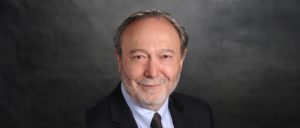
This week I sit down with Dr. Stephen Porges, a Distinguished University Scientist at Indiana University where he is the founding director of the Traumatic Stress Research Consortium. He is Professor of Psychiatry at the University of North Carolina, and Professor Emeritus at both the University of Illinois at Chicago and the University of Maryland.

He served as president of the Society for Psychophysiological Research and the Federation of Associations in Behavioral & Brain Sciences and is a former recipient of a National Institute of Mental Health Research Scientist Development Award. He has published more than 400 peer-reviewed papers across several disciplines including anesthesiology, biomedical engineering, critical care medicine, ergonomics, exercise physiology, gerontology, neurology, neuroscience, obstetrics, pediatrics, psychiatry, psychology, psychometrics, space medicine, and substance abuse. In 1994 he proposed the Polyvagal Theory, a theory that links the evolution of the mammalian autonomic nervous system to social behavior and emphasizes the importance of physiological state in the expression of behavioral problems and psychiatric disorders. The theory is leading to innovative treatments based on insights into the mechanisms mediating symptoms observed in several behavioral, psychiatric, and physical disorders.

He is the author of multiple books on his Polyvagal Theory: including the Neurophysiological foundations of Emotions, Attachment, Communication, and Self-regulation, as well as Polyvagal Safety: Attachment, Communication, Self-Regulation. His newest book cowritten with his son is called Our Polyvagal World, How Safety and Trauma Change Us. Dr. Porges is the creator of a music-based intervention, the Safe and Sound Protocol ™ (SSP), which is used by therapists to improve social engagement, language processing, and state regulation, as well as to reduce hearing sensitivities.

This is such a fascinating conversation. He brings the worlds of psychiatry and anthropological physiology into union for us to understand the why of trauma reactions and the future unwinding that is now possible. This is a must listen to conversation if you know anyone with trauma history.

Please enjoy my conversation with Professor Porges,
Dr. M

Dr. M’s SPA Newsletter Volume 15 Issue 30 – Beyond Behaviors Part 2, Mona Delahooke, PhD

Review of Chapter 2 of Beyond Behaviors
by Mona Delahooke, PhD


“Social behavior and the capacity to manage challenge are dependent on the neural regulation of physiological state.” S. Porges

Top Down or Bottom Up?

“Before We Respond to Behavior, We Need to Understand Its Origin.”

With a deceptively simple observation, Dr. Delahooke reshapes the entire field of behavioral intervention: children’s actions come from two very different places in the brain. Some behaviors are top-down, intentional, planned, thoughtful. But many, especially the ones adults find most perplexing, arise bottom-up from stress responses generated by the body’s autonomic nervous system. We often think of this state in terms of fight or flight, however, it is not that simplistic. It is truly any significant response to the outside environment that leads to a neuroceptive reaction that is not governed by the neocortex, top down. If we don’t distinguish the source, our interventions are guesswork at best and often counterproductive at worst.

She illustrates this through a case, a child whose impulsive, disruptive behaviors were treated as failures of will or desire. School teachers and teams repeatedly urged him to “use his words,” as though language were a faucet he simply refused to turn on. What no one stopped to ask was the foundational question: Was his nervous system regulated enough to access language at all? Was he gated at the level of the amygdala blocking the ability to use his mind consciously and even have the opportunity to respond to a meaningful request? Is he capable of the ask, not in terms of willingness, but in terms of physiological access to the skill itself?
….. and more

Enjoy,
Dr. M

Dr. M’s Women and Children First Podcast #102: Jeremy Goldberg – Life Begins


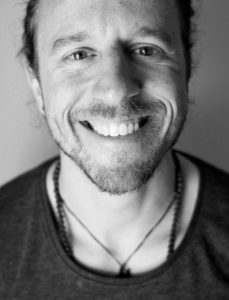
This weeks Guest is Dr. Jeremy Goldberg. He styles himself as a compassion cultivating day making change agent/empathy collecting not quitting word wizard/chief burrito appreciator aspiring to inspire/struggle overcoming ranter in charge/ferocious idealist/never giver upper/a love bombing kindness pirate. What he really does, in my mind, is write and teach the world to project love and kindness where it is not layered enough. On his website he writes: My mission is to make kindness cool, empathy popular, and compassion commonplace. As part of that purpose, I write articles, send emails, host retreats and workshops, give TEDx talks, coach clients, host a podcast, write books, and make spoken word poetry videos. My name is Jeremy, I founded Long Distance Love Bombs, and I am fucking stoked to meet you. Send me an email and let’s get going: LongDistanceLoveBombs at gmail dot com. We breakdown words, relationship, connection and being happy in a world of silly tribal divisiveness!

In this conversation we discuss his experience as a new father and the initiation of fatherhood. “I have been wiped out and annihilated by parenting and the initiation of fatherhood. Hands down, brutally, face dragged along the hot coals of the initiation….” There are so many real, honest, open truths dropped along the winding road of this discussion. If you are young and ready to understand the world of fatherhood, this is a conversation for you!

Dr. M

Dr. M’s Women and Children First Podcast #93 – Lisa Danahy, MS, C-IAYT, YACEP – Calming the Next Generation

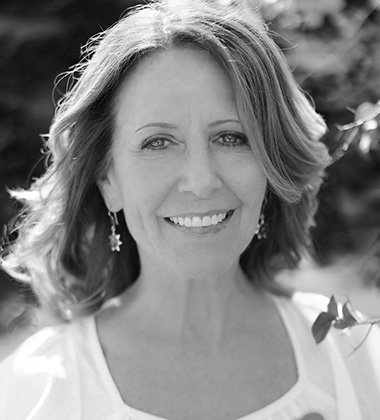
Today’s guest is Lisa Danahy, a powerhouse in the world of yoga therapy, trauma-informed education, and social-emotional learning. With over three decades of experience as a school administrator, curriculum designer, and wellness educator, Lisa brings a rare blend of clinical insight, compassion, and practical tools to help children and the adults who care for them find calm in a chaotic world.

Lisa holds a Master of Science in Yoga Therapy, is a certified yoga therapist and educator, and is the founder of Create Calm, a nationally recognized nonprofit that’s transformed wellness access for neurodiverse, disabled, and underserved youth across the country. Since 2016, Create Calm has delivered evidence-based programs to thousands of students, educators, and families in school systems nationwide.

Lisa’s approach integrates the latest research in psychology, neuroscience, and movement science into accessible practices that support emotional regulation, resilience, and whole-person healing. She’s a Hay House author, international speaker, and a trusted trainer for clinicians, caregivers, and teachers alike.

Stay with us as we explore how her work is redefining wellness in schools, clinics, and communities.

You can learn more about Lisa’s work at www.CreateCalm.org and www.MondayMindfulness.com.

Let’s dive in.

Please Enjoy,

Dr. M

Dr. M’s SPA Newsletter Volume 15 Issue 12

There is a quiet truth written in the tomes of family life that science keeps confirming over and over. It’s worth pausing to reflect on.

A warm bond between a father and child lights a path toward a steady, grounded adulthood. Studies show kids with an emotionally present dad, someone who’s there with a hug or a knowing nod, are less likely to stumble into behavioral trouble. Boys, especially, often look to their fathers as a mirror, shaping themselves in the image of a dad they feel close to. It’s a simple gift: presence breeds strength, presence breeds exploration of self, presence breeds knowing, presence breeds growth in all things for men.

Now, here’s a twist you might not expect. The old-school image of the rugged, masculine dad, stoic and commanding, was once thought to mold boys into the same mold. But research, like a wise teacher, reveals otherwise. A boy’s masculinity isn’t forged by a father’s stern hand; it’s an innate spark, flickering or bold regardless of style. As a Stoic father might counsel, we can’t control the nature we’re given, only how we nurture it. So, let’s release the pressure to force a mold and instead guide with patience. This theory follows the excellence of The Carpenter and the Gardener by Gopnik…. and a recipe.

Enjoy

Dr. M

Dr. M’s SPA Newsletter Volume 14 Issue 48

Holidays and Connection

The Christmas and winter holiday season is a unique time to sit back reflect on the past year. To behold the timeless beauty of life. The shared time offers us an opportunity to pause and connect with those who matter or should matter most in our lives. I love the bathroom plaque that says at the end of life it won’t matter what you owned or what you knew, but rather the impact you had in a child’s life. Fortunately, for us, the holidays bring a chance to foster authentic human connections. To actually sit in conspiracy together. These moments are more than just traditions, they are essential for our emotional, mental, and even physical health. In the hustle of modern existence, where schedules dominate and technology often mediates relationships, we are losing this skill set, especially for the younger generations, making it more important to stay focused now.

Let us define human connection: Human connection is the act or feeling of being seen, heard, cared for and valued by another person or group. It is a most primary need for humans starting in infancy when a child needs a mother’s touch and milk. It arises from the countless meaningful interactions that foster mutual understanding, trust, empathy, and shared emotional experiences that ultimately lead to a child’s feeling of safety. The critical time period to establish attachment and connection is the first 2 to 3 years of life. Plus a section of literature review and a recipe of the week.

Enjoy,

Dr. M

1 2 6