drugs

Dr. M’s Women and Children First Podcast #98 William Parker, PhD – Acetaminophen and Autism – What Do We Know in 2025?

Welcome to Dr. M’s Women & Children First Podcast, where we engage with pioneering voices at the intersection of science, healthcare, and the well-being of families.

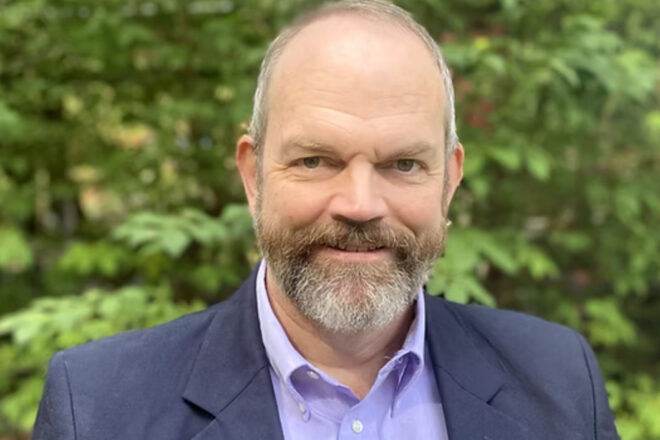
Today, I’m honored to introduce Dr. William Parker, PhD. Dr. Parker is perhaps best known for discovering the function of the human appendix, but his contributions to science extend far beyond that single discovery. He studied biology and chemistry as an undergraduate before earning his PhD in Chemistry from the University of Nebraska–Lincoln in 1992. Since the 1980s, he has conducted innovative research, publishing more than 150 peer-reviewed articles that span immune function, microbiome science, and human health.

Dr. Parker was the first to compare immune systems in wild animals with those of their laboratory counterparts, and among the first to conclude that changes in the human “biota”, the symbiotic organisms living within us, brought on by modern society can contribute to depression and anxiety. After nearly three decades at Duke University, where he served as associate professor and research leader, he founded WPLab, Inc., a nonprofit dedicated to understanding and educating about the causes of chronic inflammatory diseases in high-income societies.

Currently a visiting scholar at the University of North Carolina, Dr. Parker collaborates widely with colleagues from Duke University, University of Montreal, Czech Academy of Sciences, University of Groningen, University of Colorado Boulder, and scientists across the pharmaceutical industry.

In recent years, he has turned his attention to a provocative and urgent question: the potential links between early acetaminophen exposure and autism spectrum outcomes. His current work combines mechanistic and epidemiologic approaches to explore how acetaminophen’s effects on human physiology at critical stages of development might influence neurodevelopment.

In our conversation, we’ll explore:

  • The evidence and hypotheses behind acetaminophen’s potential role in autism risk
  • What families and clinicians should know: what’s plausible, what remains speculative, and where research is heading next

I’m thrilled to share this episode with Dr. Parker, whose intellectual curiosity, scientific rigor, and courage to ask difficult questions embody the spirit of this show.

Dr. M

Dr. M’s SPA Newsletter Volume 15 Issue 13

Literature Review

1) An exciting phase three trial with the CETP inhibitor Obicetrapib has shown serious promise for ASCVD and Alzheimer’s Disease (AD). “In BROADWAY, a pre-specified AD sub-study was designed to assess plasma AD biomarkers in patients enrolled in the BROADWAY trial and evaluated the effects of longer duration of therapy (12 months) with a prespecified population of ApoE3/4 or 4/4 carriers. The sub-study included 1727 patients, including 367 ApoE4 carriers. The primary outcome measure was p-tau217 absolute and percent change over 12 months. Additional outcome measures included neurofilament light chain (“NFL”), glial fibrillary acidic protein (“GFAP”), p-tau181, and Aβ42/40 ratio absolute and percent change over 12 months. NewAmsterdam observed statistically significant lower absolute changes in p-tau217 compared to placebo over 12 months in both the full ITT population (p<0.002) and in ApoE4 carriers (p=0.0215).” (NAMS)

Obicetrapib has shown significant LDL and Lp(a) lowering effects as well in early trials. I will be watching this discovery closely as it may be a game changer for these diseases. “In the BROADWAY trial, more than 2,500 participants with established heart disease or genetic high cholesterol were given either Obicetrapib or a placebo, in addition to their regular cholesterol medications. After 12 weeks, those on Obicetrapib had dropped their LDL cholesterol by 32.6 per cent and Lp(a) by 33.5 per cent on average – many achieved guideline-recommended targets for the first time.” (Sci Tech Daily) The drop in Lp(a) is the profound result as this is a massive risk factor for ASCVD and to date is not moveable by statins and most used meds.

2) GLP1 drugs and risk for macular degeneration?… and more

Dr. M

Dr. M’s Women and Children First Podcast #20 Reboot – Sandy Newmark, M.D. – ADHD Part II

ADHD without Drugs – This is a reboot of this podcast from 2022 as it aligns with the podcasts of Dr. James Greenblatt and Dr. Kate Henry
Sandy Newmark, MD is the Director of Clinical Programs at the University of California at San Francisco’s Osher Center for Integrative Health. He is an Integrative Pediatrician and a Professor in the Department of Pediatrics at UCSF with the title of Osher Foundation Endowed Chair in Clinical Programs in Integrative Medicine. To me, he is an amazing teacher and onion peeler in the world of attention deficit.
I met Sandy back in 2006 as he was the lead Pediatric teacher in the University of Arizona’s Integrative Medicine Fellowship. He immediately made an impact in my career as a leader in this new way of seeing the world of medicine.
His bio lists: Dr. Sanford Newmark specializes in integrative neurodevelopmental pediatrics including autism, ADHD, and related conditions. Dr. Newmark lectures widely on both autism and ADHD and has authored three chapters in integrative medicine textbooks. He is the author of the book “ADHD Without Drugs, a Guide to the Natural Care of Children with ADHD.” His online video, “Do 2.5 Million Children Really Need Ritalin? An Integrative Approach to ADHD,” has been viewed over 4.5 million times.
Know this, this is an hour of your life that you will want to dedicate to Dr. Newmark’s thoughts. Especially, if you or your child has ADHD.
Enjoy my conversation with Dr. Newmark,
Dr. M

Dr. M’s SPA Newsletter Audiocast Volume 13 Issue 23

Literature Review: This week we discuss articles about the Inhalation of polyamides or nylon in microsizes, masking and effectiveness, cannabis use in youth and covid 19 versus influenza and more. Part two is a look at research related to pollution and the risk of cardiac disease.

Enjoy,

Dr. M


Dr. M’s SPA Newsletter Audiocast Volume 13 Issue 4

This week we do a literature review looking at Neurology with specific stops at sleep loss and emotional regulation, APOE4 and Alzheimer’s Disease, memory consolidation with sleep versus wake, gaslighting and more . We also look at potassium as a mineral of necessity. We finish with obesity and Semaglutide.   Enjoy, Dr. M

Dr. M’s SPA Newsletter Audiocast Volume 12 Issue 48

This week we take a look at: Drug Induced Micronutrient Loss, Soleus Push Ups and Miror Neurons

To function at the highest and most optimal state requires providing our human engine with nutrients, both macro and micro types. By macro, I mean fats, carbohydrates and proteins. By micro, I mean minerals and vitamins which are cofactors for enzymatic activity driving the machine to normalcy of action whatever that action is. What dictates sufficiency? How do drugs disrupt this optimization success?
and much more…
Enjoy,
Dr. M