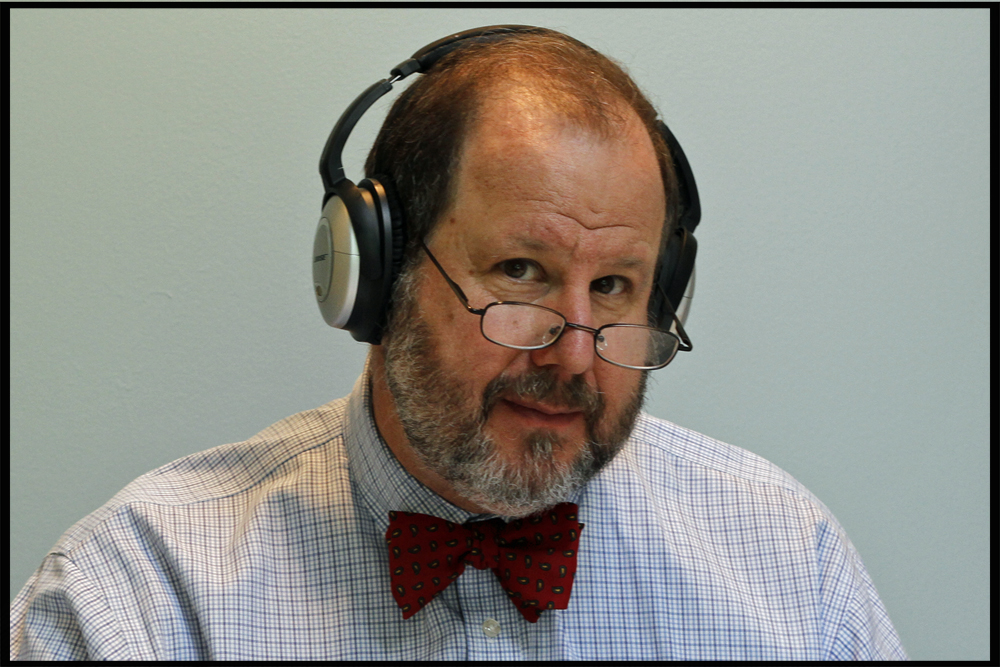
Dr. M’s Women and Children First Podcast #111: Duey Freeman, MA – Attachment


Welcome back to Dr. M’s Women and Children First. Today’s conversation moves into one of the deepest layers of human development: attachment, relationship, and the way early experiences shape the architecture of our emotional lives.

My guest today is Duey Freeman, a licensed therapist, teacher, mentor, and internationally respected voice in attachment theory, human development, and relational psychology. Duey has spent decades teaching therapists, graduate students, and helping professionals around the world, developing a practical framework for understanding how connection, or the absence of it, shapes the nervous system, identity, and the capacity for intimacy.

He has logged nearly 80,000 direct clinical hours and co-founded both the Gestalt Equine Institute and the Gestalt Institute of the Rockies.

What makes Duey’s work unique, and it is unique, is that he does not approach attachment as a sterile academic theory. He approaches it as lived human experience. His work centers on a simple but profound truth: what is injured in relationship is often only healed in relationship.

In this episode, we explore how attachment patterns emerge in childhood, how they quietly shape adult relationships, parenting, stress physiology, and even our sense of safety in the world. We discuss the roots of attachment theory through the work of John Bowlby and Mary Ainsworth, and we move into modern concepts involving trauma, nervous system regulation, emotional attunement, and relational repair.

We also touch on an uncomfortable reality in modern culture: many people are surrounded by communication yet starving for authentic connection. Children especially do not simply need instruction or behavioral management. They need co-regulation, attunement, eye contact, emotional presence, and secure relational anchors.

This conversation is not just for therapists. It is for parents, physicians, educators, coaches, and anyone trying to understand why humans behave the way they do under stress, conflict, intimacy, or loss.

Duey brings an unusual combination of wisdom, groundedness, tenderness, and clinical depth to this discussion. I have heard him frequently called Yoda, and if you knew him, you would immediately understand and agree with that moniker. You can feel that he has spent a lifetime studying not just psychology, but people.

So sit back and enjoy this remarkable conversation with Duey Freeman on attachment, psychology, and the relational foundations of being human.

Dr. M

Dr. M’s SPA Newsletter Volume 16 Issue 11 – Magnesium

Screenshot


Magnesium

Magnesium is a major cofactor in over 300 enzymatic reactions in the body, less a supplement than a piece of physiologic infrastructure. It is required for energy production (ATP), insulin signaling, protein synthesis, blood pressure regulation, and proper muscle and nerve function, essentially touching every major system we care about.

And it goes deeper: magnesium is necessary for the creation and protection of DNA and RNA and for the production of glutathione, one of our most important intracellular antioxidants/detox mechanisms. About half of our magnesium is stored in bone and most of the rest in soft tissues, with less than 1% circulating in the blood, tightly regulated by the kidneys, so the serum level we commonly measure is a very limited window into total body status….

Enjoy,
Dr. M

Dr. M’s SPA Newsletter Volume 16 Issue 10 – Covid 6 Years Later


Covid 6 Years Later

What Should We Remember

The COVID Post-Mortem: What We Missed (and What We Still Can Fix)

We ran the largest public health experiment of our lifetime.

We failed.

Not everywhere.

Not always.

But in the places that mattered most, children, truth, and upstream health, we got it wrong.

And if we don’t name it clearly, we’ll do it again.

The First Mistake: Forgetting the Child

When the world shut down, we told ourselves it was temporary.
Two weeks.
Flatten the curve.
Regroup.
Then two months became a season.
A season became a year.
For some kids, it became a disappearance.
Over 230,000 children vanished from the school system across 21 states.
Not lost like keys.
Lost like opportunity.
Lost like trajectory.

And here’s the uncomfortable truth:
The kids who disappeared were not the kids with options.

The well-resourced adapted:
Private schools
Learning pods
Reliable internet
Parental support
They bent. Some even thrived.

The vulnerable?
They absorbed the shock.
Education lost → structure lost → nutrition lost → safety net lost.
and more….

Dr. M

Dr. M’s Women and Children First Podcast #110: F3 Nation and Fatherhood


Welcome to Dr. M’s Women and Children First Podcast. Today’s conversation is a little different.

Six men. One table. No scripts.

Just a shared commitment to something that doesn’t come with a manual—fatherhood.

We’re talking about what it means to show up as a dad when you’re tired, when you’re stretched thin, and when the stakes feel higher than anything else you do.

And we’re grounding that conversation in the ethos of F3 Nation—fitness, fellowship, and faith—where men gather early, push each other physically, and, more importantly, build something deeper: accountability, purpose, and community.
Because strong fathers don’t happen by accident. They’re forged—day by day, rep by rep, conversation by conversation.

Let’s get into it.
Dr. M

Dr. M’s SPA Newsletter Volume 16 Issue 9 – Leadership


Brene Brown – Leadership

Tools to Teach Your Children and SELF

“Stand firmly enough to lead, loosely enough to listen.”

Strong Ground by Brené Brown published in 2025

Breaking down this new book by the excellent Brene Brown, we find that strong leaders don’t eliminate tension or risk. They hold it. And this is key! What does the hold look like? How does it show up to the team?

The theme in my mind is “toughness with tenderness”

Clarity is kindness. Vagueness is avoidance dressed as politeness.
You can be both confident and uncertain. That’s not weakness, it’s reality.
Values are not what you believe. They’re what you do under pressure.
Most leadership failures are emotional avoidance, not strategic failure.
Accountability without empathy is cruelty. Empathy without accountability is chaos.
People don’t disengage because work is hard, they disengage because trust erodes.
The goal is not control. The goal is grounded presence in uncertainty.
You can’t build brave cultures with armored leaders.
Paradox is not a problem to solve, it’s a condition to manage.
If you’re always comfortable, you’re not leading. You’re maintaining.

I especially, like the last one. Discomfort is the path to growth in all things. Think euthermia for temperature, not a recipe for human cellular health or plants for that matter. Temperature through environmental swings are keys to protein elaboration for handling the cold and the heat. The lack of swing equates to a lack of adaptability…. and a piece on the Stakeholder.

Dr. M

Dr. M’s Women and Children First Podcast #109: Nutrition, Epigenetic Change and Childhood Disease


Nothing in biology is random.
Not growth.
Not metabolism.
Not disease.
What we will explore today is the reality that the earliest inputs in life: nutrition, environment, signaling,
don’t just influence outcomes…
They shape them.
They write the first draft.
And if you understand that, if you truly let that land,
then everything about how we approach pregnancy, childhood, and prevention begins to shift.
From reaction…to intention.
From downstream management…to upstream design.

Why This Conversation Matters
This episode is not just another discussion.
In many ways, it is ground zero.
Because if you don’t understand this layer, the imprinting, the epigenetic programming, the responsiveness of biology to environment, then everything that follows in this podcast…becomes harder to fully see.
But once you do see it, the picture sharpens.
You begin to understand:why trajectories diverge early, why children present so differently and why the same diagnosis can have completely different roots.

This is the beginning of a new map.
And maps matter.

Gratitude to Today’s Guests
I want to take a moment to acknowledge the voices you heard today—because this kind of thinking doesn’t happen by accident.

Lucia Aronica
Dr. Aronica is a Stanford scientist and a global authority in nutritional epigenetics, helping clinicians understand that food is not simply fuel—it is biological information that actively programs gene expression.

She created Stanford’s first courses in nutritional epigenetics and pioneered the Epinutrition framework, a clinical model that reframes nutrition as signaling, not supplementation.

You may recognize her from the Netflix documentary You Are What You Eat: A Twin Experiment, and she is now launching the world’s first Clinical Epinutrition Certification, training health professionals to use food as epigenetic medicine.

Emily Stone Rydbom
Emily is a clinical nutritionist, researcher, and digital health founder working at the frontier of precision maternal nutrition.

As Founder and CEO of GrowBaby Health, and through her work with GrowHealth Technologies, she is building AI-enabled systems that integrate nutrition directly into standard obstetric care. With over 14 years of clinical experience, she has helped pioneer the “Standard of Care PLUS” model, demonstrating meaningful reductions in preterm birth and gestational diabetes in high-risk populations.

She is also a co-investigator on the ROOT Study—bringing this work directly into real-world maternal care here in North Carolina.

Samantha N. Fessler
Dr. Fessler brings a deep scientific lens to the intersection of metabolism, inflammation, and perinatal nutrition.
With a PhD in Exercise and Nutritional Sciences from Arizona State University, her work has focused on how nutritional strategies can modulate the interplay between immune signaling and metabolic function to improve outcomes for mothers and children.

As Director of Scientific Affairs at Needed, she helps translate rigorous science into actionable, evidence-based approaches that clinicians and families can actually use.

Randy L. Jirtle
And finally, Dr. Randy Jirtle—joining us again—whose work, quite simply, changed how we understand biology.
A pioneer in epigenetics and genomic imprinting, Dr. Jirtle’s research on the agouti mouse model demonstrated for the first time that environmental inputs—particularly nutrition and chemical exposure—could directly alter gene expression across generations. His work reframed the gene from a fixed sentence…to a responsive system.

In fact, Time Magazine once described it this way:“A gene represents less of an inexorable sentence and more of an access point for the environment to modify the genome.”

He is a Professor of Epigenetics at North Carolina State University and Senior Scientist at University of Wisconsin–Madison and remains, at his core, a deeply curious thinker.

And that curiosity… is what moved this field forward.

Final Thought: If there is one takeaway from today, it is this: The environment is not acting on the child. The child is responding to the environment.

And that response…is being written into biology.

Dr. M

Dr. M’s SPA Newsletter Volume 16 Issue 8 – Systems Biology


THE FUNCTIONAL MEDICINE STORY
DR. JEFF BLAND

“Change occurs from the outside in”
Dr. Bland

Medicine has a habit of believing it has arrived. Every generation of physicians looks around the room, surveys the white coats and microscopes and MRI machines, and quietly assumes the puzzle is mostly solved. History laughs at that assumption. The truth is that medicine is always mid-sentence in a very long story.

Dr. Jeff Bland has spent decades helping rewrite that sentence.

In a recent conversation on The Root Cause Business of Medicine Podcast, Dr. Bland’s life work comes into focus. Not as a rebellion against medicine, but as an expansion of it. His influence on nutrition science, biochemical individuality, and what we now call functional medicine has helped move the field away from the narrow idea that disease is simply something to suppress or worse just name. Instead, he has pushed a more interesting question forward: why did the disease appear in the first place?

That sounds obvious. It is so far from obvious that most physicians do not ask the question.

Bland’s career sits at the intersection of nutrition, biochemistry, genetics, and what he calls systems biology. Over the decades he has authored more than 100 peer-reviewed papers and written many books aimed at both clinicians and the public. But numbers don’t tell the story. What matters is the conceptual shift he helped introduce.

For most of modern medical history, the dominant model has been reductionist. And reductionism is the scientific approach of breaking complex systems into their smallest parts. It has given us antibiotics, vaccines, and surgical techniques that save lives every day. But it has also left a blind spot. When we zoom too far in, we sometimes lose the map of the entire ecosystem.

Human biology is not a machine made of replaceable parts. It is a network.

It is supremely interconnected…. and a literature review
Dr. M