
Articles

Dr. M’s SPA Newsletter Volume 16 Issue 2 – School Food

School Based Nutrition – Why is it happening this way?

There is a quiet experiment happening in American childhood, and we should stop pretending it’s benign.

In the 1970s and 1980s, when I attended school, school food was far from perfect, but it existed in the context of something essential: it was mostly prepared on site, minimally processed (but changing in that direction) and not laden with additives and chemicals (Yet). Oh, and most children still ate meals prepared at home at almost every other occasion. Dinner wasn’t aspirational or Instagram-worthy, but it was routine. Real food. Cooked by someone who knew the child, at a table where nervous systems could downshift. School lunch was a supplement to that structure, not the metabolic foundation of a child’s life. That has all changed in a short 50 years. Mirroring the change in weight and childhood disease prevalence.

• 1970s – some processed foods begin to enter school cafeterias at scale
• 1980s – preservatives and additives become routine
• 1990s – ultra-processed foods dominate

In 1994, new standards were added: This table lays out how much of each food group schools were supposed to offer over a week under the 1994 standards. These were the first nutrition-focused meal standards the USDA put into place:

For Breakfast (all grades K–12):
Fruit: 2.5 cups/week
Vegetables: 0 cups/week
Grains/Bread: 0–10 oz equivalent/week (depending on combinations of grains and protein)
Meat/Meat-alternative: 0–10 oz equivalent/week
Milk: 5 cups/week

For Lunch (split by grade levels):
Fruit: K–3 also 2.5 cups; grades 4–12 get 3.75 cups/week
Vegetables: still 0 cups/week (no separate vegetable requirement yet)
Grains/Bread: at least 8 oz eq/week
Meat/Meat-alternative: 7.5 oz eq/week for breakfast; 10 oz eq/week for lunch
Milk: 5 cups/week

(Hopkins 2015)

What’s notable, reflected in the structure of this table, is that vegetables weren’t required at all yet, and the standards were very much food-group based, not ingredient-level nutrient quality checks. That created space for schools to rely on industrially produced entrées and sides that technically met volumes of grains or proteins but could still be ultra-processed products with long ingredient lists, many of these foods would meet a NOVA class 4 classification (the worst type). Think fruit cup in sugary syrup…..

Dr. M
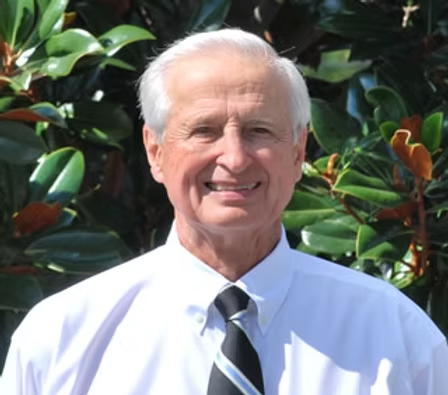
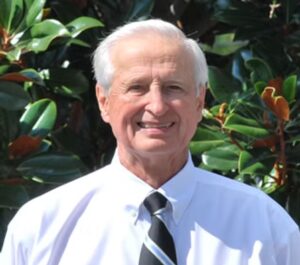
Dr. M’s Women and Children First Podcast #100 Wayne Koontz, MD – Vaccines and Disease over 50 years

Today on Dr. M’s Women and Children First Podcast, we welcome Dr. Wayne Koontz, a founding partner at Salisbury Pediatric Associates in Salisbury North Carolina, where he has spent over 5 decades caring for generations of families with compassion, wisdom, and a deep commitment to community health.

Dr. Koontz earned his Undergraduate degree and his Doctor of Medicine from Wake Forest University, where his early love of science and service began to take shape. He went on to complete his pediatric residency at Dallas Children’s Medical Center, part of the University of Texas Southwestern Medical School, where he received outstanding training in both academic and clinical pediatrics.

As one of the founding physicians at Salisbury Pediatrics, Dr. Koontz helped to build a model of child-centered, family-oriented care that has served the Rowan County. His commitment to children’s well-being extends beyond the clinic, reflecting a lifelong dedication to preventive medicine, developmental health, and the nurturing of strong physician–family relationships.

It’s an honor to have Dr. Koontz with us today to share his clinical insights as they relate to infection and vaccination from a longevity based pediatric career. Dr. Koontz has a unique perspective to share as his 50 plus years of experience cover the prevaccine infectious disease based practice of pediatric medicine all the way to the current vaccine centric and reduced infectious disease burden reality. That is a timeline worthy of exploration.

So lets explore.

Dr. M

Dr. M’s Women and Children First Podcast #99 Liz Mumper, MD – Kids and Covid

Welcome to Dr. M’s Women & Children First Podcast, where we engage with pioneering voices at the intersection of science, healthcare, and the well-being of families.

Today on Dr. M’s Women and Children First, we welcome Dr. Elizabeth Mumper, a physician, educator, and thought leader whose career has profoundly influenced the practice of integrative pediatrics.

Dr. Mumper earned her Bachelor of Science degree from Bridgewater College, graduating magna cum laude, before attending the Virginia Commonwealth University School of Medicine, where she received her medical degree. She completed her pediatric residency at the University of Virginia and served as Chief Resident in Pediatrics. She remained at UVA as an Associate Professor of Clinical Pediatrics from 1997 to 2005, mentoring future physicians and advancing holistic, evidence-based approaches to child health.

Following her time in academia, Dr. Mumper founded The Rimland Center for Integrative Medicine in Lynchburg, Virginia, a clinic dedicated to children with autism spectrum disorders, PANS/PANDAS, allergies, and complex chronic illnesses. Her practice integrates the best of conventional pediatrics with biomedical and functional medicine principles, always guided by compassion and curiosity.

She has been a leading educator with the Medical Academy of Pediatric Special Needs (MAPS) and a frequent international lecturer, teaching clinicians how to recognize and treat the root causes of immune dysregulation, inflammation, and neurodevelopmental challenges.

Dr. Mumper is also the author of the new book Kids and COVID, an insightful exploration of how the pandemic impacted children, physically, emotionally, and developmentally, and what lessons medicine must learn moving forward. In our conversation, we discuss her book in depth, as well as the broader implications of the COVID-19 pandemic for pediatric care, resilience, and future public health policy.

Finally, we dive into the complex topic of vaccines, considering what we’ve learned from the pandemic years and expanding the conversation begun with Dr. Paul Offit and Dr. Joel Warsh.

Dr. Mumper’s lifelong dedication to children, her fearless pursuit of truth, and her balanced, science-driven voice make her one of the most respected figures in functional medicine.

Please join me in welcoming my friend and colleague,  Dr. Elizabeth Mumper.

Dr. M

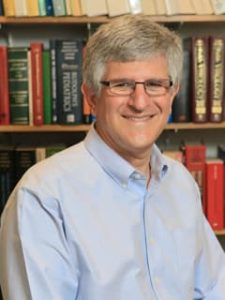
Dr. M’s Women and Children First Podcast #97 Paul Offit, MD – Vaccines – What Do We Know in 2025 Part 2?

Welcome back to Dr. M’s Women & Children First, where we explore the front lines of children’s health and what matters most for our families.

Today I’m honored to bring you Dr. Paul A. Offit, the Director of the Vaccine Education Center and Professor of Pediatrics in the Division of Infectious Diseases at Children’s Hospital of Philadelphia. He also holds the Maurice R. Hilleman Professorship of Vaccinology at the University of Pennsylvania.

Dr. Offit is a globally recognized expert in virology and immunology. He has served on the CDC’s Advisory Committee on Immunization Practices and FDA’s Vaccines and Related Biological Products Advisory Committee. He’s co-editor of the seminal vaccine textbook Vaccines, and for decades has been one of the clearest scientific voices defending evidence, transparency, and children’s health.

This week, we’ll dig into COVID, vaccine policy, and what’s ahead for children in light of the latest shifts. Among current headlines: Healthy children and pregnant women are no longer being uniformly recommended for COVID vaccines by Health Secretary Robert F. Kennedy Jr., a decision that’s stirring debate among pediatricians and public health experts like Dr. Offit. He’s sharply voiced concerns about removing key vaccine recommendations without new data, and about the broader implications of loosening vaccine guidance for the public good.

In this conversation, we’ll cover:

  • What the science says now about bivalent COVID vaccines in kids

  • How recent policy changes affect vaccine access, trust, and safety

  • What parents need to know—what’s changed, what’s stable, and what remains uncertain

This is my third time talking with Dr. Offit, and as always, I expect you’ll leave with clarity, evidence, and questions worth sharing.

I hope you enjoy this conversation.

Let’s dive in.

Dr. M

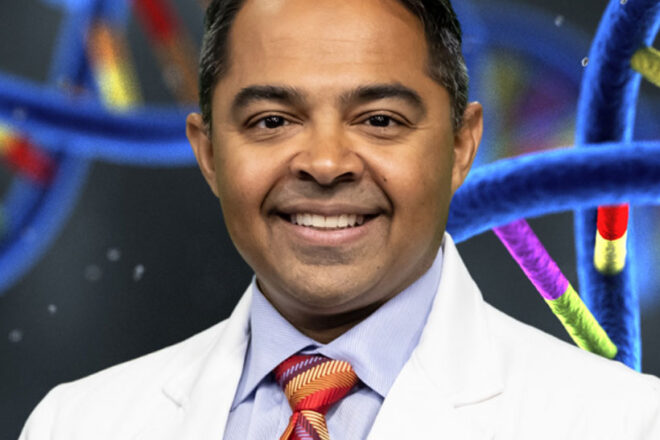
Dr. M’s Women and Children First Podcast #95 – Sanjay Bhorjaj, MD – Living Longer and Klotho

Today’s guest is Dr. Sanjay Bhojraj, a powerful voice at the crossroads of advanced interventional cardiology and root-cause wellness. Dr. Bhojraj is board-certified in Cardiovascular Diseases and Interventional Cardiology, and one of only a small number of interventional cardiologists in the United States who is also certified in Functional Medicine through the Institute for Functional Medicine.

Dr. Bhojraj earned his medical degree from Indiana University School of Medicine, trained in internal medicine at Northwestern, and completed a cardiology fellowship at the renowned Henry Ford Health System. For over two decades, he practiced in conventional cardiology, saving lives daily with stents, angioplasties, and transcatheter valve replacements.

But along the way, something essential began to stir. He found himself asking bigger questions: Why do people arrive in the cath lab in the first place? Why are we not doing more to prevent the first or second heart event? And what role do nutrition, sleep, stress, and emotional health truly play in long-term cardiovascular outcomes?

These questions led Dr. Bhojraj to Functional Medicine, not as an alternative, but as an evolution, a model that restores agency to patients and equips the body to heal through comprehensive lifestyle optimization. He now leads the Well12 Program, a transformational experience that guides individuals in upgrading the foundational systems of their health from metabolism to mindset, so they can live not just longer, but better.

Today, Dr. Bhojraj and I explore the remarkable protein Klotho and the emerging science linking it to human longevity and health span. This is a conversation you won’t want to miss, a glimpse into what may become a defining frontier in upstream disease prevention.

Enjoy,

Dr. M

Dr. M’s SPA Newsletter Volume 15 Issue 9

Today, I’m diving into a fascinating article by Scott Zimmerman and Russel J. Reiter, titled Melatonin and the Optics of the Human Body, published in Melatonin Research (2019). This piece flips the script on what we thought we knew about melatonin, light, and how our bodies interact with the sun’s rays. It’s a game-changer, especially for how we think about kids’ health in our modern, screen-filled indoor living world.

First, what is melatonin? Melatonin is a hormone made from the essential amino acid, tryptophan. It was first isolated from a cow’s pineal gland. It is an old molecule as primitive bacteria made melatonin probably 2.5 billion years ago. Its synthesis in bacteria and eukaryotes is a common linkage. Most of us know that melatonin is the “sleep hormone,” produced by the pineal gland in the brain when it gets dark at night, signaling to our bodies that it’s time to wind down and prepare to sleep. It’s the chemical expression of darkness, driving our circadian rhythms and helping us catch those precious brain cleansing moments. Zimmerman and Reiter argue that this is only half the story or maybe even less than half. For decades, research has hyper-focused on pineal melatonin that is regulated by visible light hitting our retinas. Blue visible spectrum light in the early morning suppresses pineal melatonin, which is why we should dim those screens before bed. But here’s where it gets interesting, the pineal gland isn’t the only place melatonin is made, and darkness isn’t its only trigger. Our bodies are producing melatonin in ways we’re just starting to understand, and it’s tied to light in a way that was unexpected and evolutionarily fascinating. As with all things in science and evolution, we learn what we did not know and it all makes sense once the aha moment occurs…. and a literature review. Oh and a recipe.

Dr. M

Dr. M’s SPA Newsletter Volume 15 Issue 4

What is measles – a refresher?

Measles is a serious, highly contagious and potentially deadly viral infection. It is caused by an RNA paramyxovirus. It is spread by contact with droplets from an infected person’s nose, mouth or throat. Sneezing and coughing can aerosolize the droplets and increase the range of infectious spread. Symptoms usually develop 8 to 10 days following exposure to an infected individual. A sick individual is contagious for 4 days before and 4 days after symptom onset. The reproductive rate is very high at 12+ meaning that 1 person will infect 12 and those 12 will get 12 more sick (144) and then 144 X 12 = 1728 X 12 = 20,736 and you are off to the exponential races….Plus, The Shock of a New Diagnosis: A Stoic Path Through the Storm.

Enjoy,

Dr. M

1 2 26