
safety

Dr. M’s Women and Children First Podcast #114: Aimie Apigian, MD – Biology of Trauma

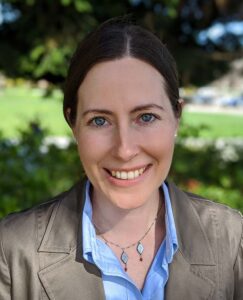
Today’s podcast guest is Dr. Aimie Apigian, a physician who has become one of the leading voices in helping us understand the biology of trauma.

Dr. Aimie is double board-certified in Preventive Medicine and Addiction Medicine, with advanced training in biochemistry, public health, and functional medicine. She earned her medical degree from Loma Linda University, where her education also included behavioral health, child psychiatric therapy, play therapy, and addiction family counseling. Before medical school, she studied Cell and Molecular Biology at the University of Washington, where she worked in the laboratory of renowned cancer researcher Dr. Larry Loeb.

She is the national bestselling author of The Biology of Trauma, featuring a foreword by Dr. Gabor Maté. The book has appeared on the USA TODAY Best-Selling Book List and has received multiple national book awards.

What makes Dr. Aimie’s work unique is her ability to bridge neuroscience, functional medicine, attachment science, and trauma therapy into a practical framework that explains how our bodies store survival patterns after stress and adversity. Rather than viewing trauma as simply a psychological experience, she teaches that it is a biological state—one that can be identified, measured, and, importantly, healed.

She is the creator of the Biology of Trauma® framework, which integrates somatic therapies, parts work, nervous system regulation, and targeted biological interventions into a structured sequence designed to restore the body’s innate capacity for healing. She is also the founder of Trauma Healing Accelerated™ and the host of the popular Biology of Trauma® Podcast, where she has educated thousands of clinicians and individuals around the world.

Today, we’re going to explore what trauma actually is from a biological perspective, how it influences immune function, metabolism, chronic disease, and childhood development, and perhaps most importantly, what it truly takes to move from surviving to thriving.

Dr. M

Dr. M’s SPA Newsletter Volume 16 Issue 14 – The Adult Chair


The Adult Chair, the Adolescent Chair and the Child’s Chair

The Adult Chair by Michelle Chalfant is a practical framework for emotional maturity, self-awareness, and healing old patterns that unconsciously drive adult behavior. The central premise is that most people move through life reacting not from their grounded adult self, but from unresolved emotional states formed during childhood and adolescence. She organizes this idea into what she calls the “three chairs”: the Child Chair, the Adolescent Chair, and the Adult Chair.

The Child Chair represents the emotional self formed in early childhood. This is the place of vulnerability, fear, shame, abandonment, loneliness, and unmet needs. When people react from this chair, they often feel helpless, emotionally flooded, overly dependent on validation, or afraid of rejection. Many adult relationship conflicts, according to Chalfant, are actually wounded children (in adult bodies) interacting with each other while wearing grown-up clothing and carrying iPhones. Same child like nervous system. Better accessories. Think of the statement: lipstick on a pig, you cannot dress up dysfunction and make it disappear.

The Adolescent Chair reflects the defensive coping strategies people develop to protect the wounded child. This includes control, perfectionism, blame, avoidance, rebellion, people-pleasing, passive aggression, and emotional shutdown. The adolescent self seeks power and protection but often creates disconnection and conflict. Chalfant argues that many high-achieving adults unknowingly operate from this chair, appearing successful externally while internally driven by fear, insecurity, or the need for approval.

The Adult Chair is the goal….

Enjoy,
Dr. M

Dr. M’s SPA Newsletter Volume 16 Issue 1 – Beyond Behaviors Part 3, Mona Delahooke, PhD

Screenshot

Chapter 3 – Individual Differences

Dr. Delahooke starts Chapter 3 by allowing Margaret Mead to remind us that each child is absolutely unique: “Always remember that you are absolutely unique. Just like everyone else.” This is more than a witty paradox, it is the hinge upon which all effective pediatric care swings. When we take individual differences seriously as neurobiological fact, we can finally stop confusing adaptive survival responses with defiance, stop labeling children as problems, and begin the real work of supporting the mind body systems that shape behavior from the inside out.

Let us review what we have learned in Beyond Behaviors so far – We are invited to descend below the waterline of the behavioral iceberg. What we see at the surface: the tantrum, withdrawal, rigidity, hyperactivity, the refusal to transition is merely a set of observable outputs from deeply personal internal variables. The sensory wiring, physiological states, immune triggers, thoughts, feelings, memories, and the child’s moment-to-moment sense of safety. Without diving into these subterranean layers, we risk treating smoke while ignoring the fire, which is the general state of current pediatric psychiatric medical therapeutics. We mostly treat the smoke. We don’t often ask about the fire. Her central thesis is simple, clinically robust, and profoundly humane:

Children behave according to the state of their nervous system, and their nervous system is shaped by individual biological, emotional, and sensory differences.

Once we understand this, behavior becomes not a moral test but a window into the child’s internal world…..

Dr. M

Dr. M’s SPA Newsletter Volume 15 Issue 26 – Back To Sleep

Back to Sleep and Sudden Infant Death Syndrome (SIDS)

Sudden Infant Death Syndrome (SIDS) is defined as “the sudden death of an infant under one year of age which remains unexplained after a thorough case investigation, including a complete autopsy, examination of the death scene, and review of the clinical history.”

During my time at the University of Virginia, I trained under neonatologist Dr. John Kattwinkel, a champion for newborn health and one of the leading figures in shaping national safe sleep policies. In the early 1990s, he chaired the American Academy of Pediatrics (AAP) Task Force on Infant Sleep Position and SIDS, which laid the foundation for the landmark Back to Sleep campaign.

At that time, SIDS claimed roughly 14 infants per 10,000 live births in 1988. Following the campaign’s launch in 1994, the rate plummeted by over 60%, reaching about 5 deaths per 10,000 live births by 2006. Despite this dramatic improvement, recent data suggest that the decline has plateaued…..

Dr. M

Dr. M’s Women and Children First Podcast #100 Wayne Koontz, MD – Vaccines and Disease over 50 years

Today on Dr. M’s Women and Children First Podcast, we welcome Dr. Wayne Koontz, a founding partner at Salisbury Pediatric Associates in Salisbury North Carolina, where he has spent over 5 decades caring for generations of families with compassion, wisdom, and a deep commitment to community health.

Dr. Koontz earned his Undergraduate degree and his Doctor of Medicine from Wake Forest University, where his early love of science and service began to take shape. He went on to complete his pediatric residency at Dallas Children’s Medical Center, part of the University of Texas Southwestern Medical School, where he received outstanding training in both academic and clinical pediatrics.

As one of the founding physicians at Salisbury Pediatrics, Dr. Koontz helped to build a model of child-centered, family-oriented care that has served the Rowan County. His commitment to children’s well-being extends beyond the clinic, reflecting a lifelong dedication to preventive medicine, developmental health, and the nurturing of strong physician–family relationships.

It’s an honor to have Dr. Koontz with us today to share his clinical insights as they relate to infection and vaccination from a longevity based pediatric career. Dr. Koontz has a unique perspective to share as his 50 plus years of experience cover the prevaccine infectious disease based practice of pediatric medicine all the way to the current vaccine centric and reduced infectious disease burden reality. That is a timeline worthy of exploration.

So lets explore.

Dr. M

Dr. M’s SPA Newsletter Volume 15 Issue 22/23/24 – Acetaminophen and Autism

Review Part III – after the Attia Podcast

After completing the interview with Dr. William Parker and now listening to Peter Attia’s analysis, let us look again at this question. I repeat that the initial question has not changed for me. The first and most fundamental question to ask is this: What is the true value of acetaminophen in health compared with the potential risk if the associated findings are indeed correct?

My response to this question has been altered by the analysis so far.

I love this from Dr. Attia: “Some people might be wondering, why did you just take so long to explain all this to us? Why don’t you just give us the answer? I just want the sound bite, man

Peter’s reply, “If you just want sound bites, you’re never going to learn.”

Honestly, if you just want sound bites, this isn’t the podcast for you. But if you actually want to be able to learn to think for yourself, then that’s what we’re here to do. And that’s the reason we killed ourselves over the past week to put together the most thorough gathering of all the data we could find and the most intense night-weekend analysis possible. “

I agree! I believe that the science and data are key. So here goes – round three!…..

Dr. M


Dr. M’s Women and Children First Podcast #87 – Tasha Stoiber, PhD

Welcome back to Women and Children First, where we dive into the science, policies, and practices that shape the health of our families and communities. Today, we are honored to have Dr. Tasha Stoiber, a leading scientist at the Environmental Working Group (EWG), whose work is at the forefront of protecting public health from environmental contaminants. Dr. Stoiber is a distinguished environmental scientist dedicated to understanding the impact of chemical exposures on public health.

Dr. Stoiber earned her Ph.D. in Environmental Chemistry from the University of Wisconsin-Madison. She furthered her expertise through postdoctoral research in the ecotoxicology of nanoparticles in human tissues at the University of California, Davis. She brings a wealth of expertise to the conversation on how exposures to harmful substances, such as PFAS, heavy metals, and endocrine disruptors, can affect human health, especially in vulnerable populations like children and pregnant women.

Currently, as a Senior Scientist at EWG, she focuses on researching contaminant chemicals in consumer products. At EWG, she plays a critical role in translating complex scientific research into actionable knowledge for consumers and policymakers. Her efforts help drive regulatory change and empower individuals to make safer choices for themselves and their families. Whether it’s uncovering hidden contaminants in food, advocating for cleaner drinking water, or guiding parents on reducing toxic exposures, Dr. Stoiber’s work is reshaping how we think about environmental health.

Dr. Stoiber has contributed significantly to scientific literature, with publications addressing critical issues such as the presence of per- and polyfluoroalkyl substances (PFAS) in drinking water and freshwater fish. Her research has shed light on the widespread contamination of these “forever chemicals” and their potential health risks.

Today, we’ll explore the pressing issues surrounding chemical exposures, how they influence childhood development and long-term well-being, and, most importantly, what we can do to protect ourselves. Join me as we tap into Dr. Stoiber’s deep knowledge and practical insights on creating a healthier world for the next generation.

Dr. M