Parenting

Dr. M’s SPA Newsletter Volume 15 Issue 30 – Beyond Behaviors Part 2, Mona Delahooke, PhD

Review of Chapter 2 of Beyond Behaviors
by Mona Delahooke, PhD


“Social behavior and the capacity to manage challenge are dependent on the neural regulation of physiological state.” S. Porges

Top Down or Bottom Up?

“Before We Respond to Behavior, We Need to Understand Its Origin.”

With a deceptively simple observation, Dr. Delahooke reshapes the entire field of behavioral intervention: children’s actions come from two very different places in the brain. Some behaviors are top-down, intentional, planned, thoughtful. But many, especially the ones adults find most perplexing, arise bottom-up from stress responses generated by the body’s autonomic nervous system. We often think of this state in terms of fight or flight, however, it is not that simplistic. It is truly any significant response to the outside environment that leads to a neuroceptive reaction that is not governed by the neocortex, top down. If we don’t distinguish the source, our interventions are guesswork at best and often counterproductive at worst.

She illustrates this through a case, a child whose impulsive, disruptive behaviors were treated as failures of will or desire. School teachers and teams repeatedly urged him to “use his words,” as though language were a faucet he simply refused to turn on. What no one stopped to ask was the foundational question: Was his nervous system regulated enough to access language at all? Was he gated at the level of the amygdala blocking the ability to use his mind consciously and even have the opportunity to respond to a meaningful request? Is he capable of the ask, not in terms of willingness, but in terms of physiological access to the skill itself?
….. and more

Enjoy,
Dr. M
Dr. M’s Women and Children First Podcast #92 – Kristin Jones, OT – A Therapists View of the World Today

\

Welcome back to Dr. M’s Women and Children First podcast where we look at the world of Women and Children’s Health through an anthropological lens with the humble understanding that we have a lot to learn.

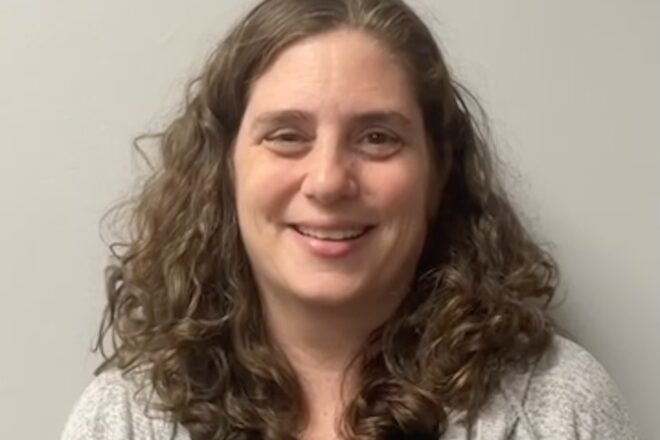
Today, we’re honored to welcome Kristin Jones, a seasoned occupational therapist from Mooresville, North Carolina, whose career reflects both deep compassion and bold innovation in the service of neurodivergent children. Kristin brings 24 years of clinical and educational experience, including the past 14 spent working in a K-12 public charter school. Recently, she shifted gears in the most personal of ways—taking time away from school-based therapy to homeschool her daughter, who has Down Syndrome.

Kristin earned her Master of Occupational Therapy from Misericordia University in 2000 and has spent her career supporting children and families across a broad spectrum of settings from early intervention and outpatient sensory clinics to schools and feeding therapy. Her passion lies in translating complex concepts from brain development and the Autistic lived experience into practical, accessible strategies for educators.

In addition to her clinical work, Kristin is committed to the education of future therapists. She serves as adjunct faculty at Misericordia University and teaches with Education Resources Inc. Her presentations with the Therapist Neurodiversity Collective reflect her ongoing mission to uplift neurodivergent voices and move beyond outdated therapeutic norms.

Kristin’s voice is one of clarity and respect for children, for families, and for the evolving science of how we learn, communicate, and thrive.

Let’s dive in,

Dr. M

Dr. M’s Women and Children First Podcast #78 – Elisa Song MD – Healthy Kids Happy Kids

This week I sit down with Dr. Elisa Song to discuss her new book, Healthy Kids, Happy Kids. Dr. Song is a graduate of Stanford University with a degree in political Science. She then attended New York University for her medical degree and finally a stop at the University of California San Francisco for pediatric residency training. In her own words, Dr. Song is a holistic pediatrician. She founded Whole Family Wellness, an integrative pediatric practice in Belmont, CA – one of the first and most highly regarded holistic pediatric practices in the country. She created Healthy Kids Happy Kids – dedicated to empowering parents to take charge of their kids’ health … naturally! She lectures around the world for the Center for Education and Development in Clinical Homeopathy (CEDH), Academy for Pain Research, Institute for Functional Medicine, and Holistic Pediatric Association, A4M among others. In this interview we look at health through a prevention first lens with a deep look at the intestinal microbiome and nutrition. Dr. Song’s immense fund of knowledge is on full display in her book and this interview.

Please enjoy my conversation with Dr. Elisa Song,

Dr. M

Dr. M’s SPA Audiocast Newsletter Volume 14 Issue 30

Sleep Part II

Let us pause here! So far we now know that humans at all ages will suffer from memory dysfunction and brain sewage cleanup problems leading to inflammation and damage long term. What ages are most at risk? They are likely mirrored by other physiologic events that are at risk based on age. Teenagers, infants and toddlers are rapidly growing creatures requiring more macro/micronutrients, water, and toxin avoidance for success. It is likely that sleep follows these same principles.

Going to a simple google scholar search for “sleep deprivation age risk” brings up countless articles on the effects of sleep deprivation in mothers and children on risk of obesity, diabetes, premature birth and much more.

….Plus more on gender and emotion as well as a recipe of the week.

Enjoy,

Dr. M

Dr. M’s SPA Newsletter Audiocast Volume 14 Issue 25

Reading Part II
Let us follow up on last weeks newsletter on reading as a cultural advantage and a human need in truth. What do we know about the neuroscience of reading dysfunction or weakened ability to achieve the goal of reading proficiency? What is the frequency of concern?
Depending on the study, 5-10% of children have reading issues like dyslexia. This has profound lifelong consequences if these issues are not dealt with in the early years of education.
Let us start again by looking at the neuroanatomy of the human reading interface. The first point of human involvement in reading is visual acceptance of the written word on page. In order to complete this task one must be able to see the word clearly in the order that it is displayed on the page and then send the neuroception to the brain via the optic nerve to the visual cortex. Then the angular gyrus interprets the words leaving the frontal lobes to engage in decoding and comprehending the information. This intricate interplay of neural networks not only facilitates the understanding of written language but also strengthens cognitive functions such as memory in the hippocampus, attention in the prefrontal cortex, and critical thinking in the neocortex…plus a piece on exercise.
Enjoy,
Dr. M

Dr. M’s SPA Newsletter Audiocast Volume 13 Issue 36

Literature Review this Week

1) From Cell Host and Microbe – “The microbiomes of cesarean-born infants differ from vaginally delivered infants and are associated with increased disease risks. Vaginal microbiota transfer (VMT) to newborns may reverse C-section-related microbiome disturbances. Here, we evaluated the effect of VMT by exposing newborns to maternal vaginal fluids and assessing neurodevelopment, as well as the fecal microbiota and metabolome. Sixty-eight cesarean-delivered infants were randomly assigned a VMT or saline gauze intervention immediately after delivery in a triple-blind manner…… and much more about the cutting edge science of today. Also a piece on napping followed by the recipe of the week.

Enjoy,

Dr. M


Dr. M’s Women and Children First Podcast #10 – Dr. Danny Benjamin, Covid, Schools and Vaccines

Dr. Danny Benjamin joins me again to discuss COVID19 delta variant in children, vaccines and the critical research that his team performed regarding back to school in North Carolina. He is the Kiser Arena Distinguished Professor of Pediatrics at Duke University and the Principle Investigator of the National Institute of Child Health and Human Development Pediatric Trials Network. His group performed two large trials of children going back to school in 2020 effectively proving that children being in school face to face was and is safe. We discuss the safety of the mRNA vaccines in the 5 to 12 year old age group.


Enjoy my conversation with Dr. Danny Benjamin,

Dr. M

1 2 20