
philosophy

Dr. M’s SPA Newsletter Volume 16 Issue 6 – Children


Why Don’t They Win

There are moments, usually late, usually quiet, when honest thinking can be had. When you zoom out and see the ecosystem around children not as a collection of caring institutions, but as a set of incentive machines. And incentive machines, unlike grandmothers, do exactly what they’re built to do.

MAKE MONEY

Tonight I sat with some difficult thoughts about the state of primary services for children in the United States. The deeper I look, the clearer it becomes that money, not well-being, drives most decisions shaping a child’s life. And the imbalance is not trending in a positive direction.

Children Continue To Lose From My Viewpoint

Approximately two-thirds of a child’s daily nourishment comes from school food programs, which too often rely on ultra-processed, calorie-dense, nutrient-poor products. Outside of school, the dominant food environment is similarly saturated with highly engineered foods that optimize profit, shelf life, and palatability rather than health. Kids are micronutrient starved, but calorically overfed. Biological systems begin to fray early. Biochemistry no longer meets cellular needs. Children develop disease and we are asked to medicate or worse rationalize away that this is NORMAL…..

Enjoy Dr. M

Dr. M’s SPA Newsletter Volume 16 Issue 4 – Relationships

Screenshot

Literature Review:

A) “Establishment of the gut microbiome during early life is a complex process with lasting implications for an individual’s health. Several factors influence microbial assembly; however, breast-feeding is recognized as one of the most influential drivers of gut microbiome composition during infancy, with potential implications for function. Differences in gut microbial communities between breast-fed and formula-fed infants have been consistently observed and are hypothesized to partially mediate the relationships between breast-feeding and decreased risk for numerous communicable and noncommunicable diseases in early life. Despite decades of research on the gut microbiome of breast-fed infants, there are large scientific gaps in understanding how human milk has evolved to support microbial and immune development.” (Davis et. al. 2022)

Main Takeaways:

First 1000 days matter a lot for microbial and immune development: Infancy is a critical window when the gut microbiome is assembled and the immune system is learning to respond to microbes and external exposures. Patterns set early can ripple into infection risk, inflammatory diseases, and atopy later in life.

Enjoy,
Dr. M

Dr. M’s SPA Newsletter Volume 15 Issue 31 – Poly Vagal Theory, Stephen Porges, PhD

I think that this is an important time to pause and relook at Polyvagal Theory before continuing with Beyond Behaviors.

Polyvagal Theory: Current Status, Clinical Applications, and Future Directions (Porges, S. 2025)

“Social behavior and the capacity to manage challenge are dependent on the neural regulation of physiological state.” S. Porges


When I dove into Stephen Porges’s 2025 review of the Polyvagal Theory (PVT), I felt like I’d stepped into a crossroads where neurobiology, clinical practice, trauma science, and human experience collide. This paper isn’t merely a summary of three decades of work (all of which I have read); it’s a spirited defense of a paradigm that’s been both celebrated (by me) and contested (by others). What follows is an honest appraisal of what the article teaches us, where it sparks real insight, and where it may fall short, especially through the lens of evidence-based medicine and developmental neurophysiology. (I also went deeper into his 2022 paper in Frontiers in Integrative Neuroscience for the biophysiology of the ANS)

At its heart, the article argues that the autonomic nervous system (ANS), through a set of hierarchically organized circuits centered on the vagus nerve, is not just a background player in stress and homeostasis, but a core regulator of social engagement, physiological flexibility, and behavior. Dr. Porges situates his theory as an alternative and expansion to classical views that treat sympathetic (fight/flight) and parasympathetic (rest/digest) branches as functional opposites. Instead, he proposes a three-component hierarchy: the ventral vagal complex (VVC) supporting social engagement, a mobilization circuit mediated by the sympathetic nervous system or fight or flight state, and a dorsal vagal circuit that facilitates shutdown or immobilization under extreme threat…..

Enjoy,
Dr. M

Dr. M’s Women and Children First Podcast #69 Repost – Stephen Porges, Ph.D. – Polyvagal Theory


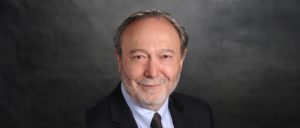
This week I sit down with Dr. Stephen Porges, a Distinguished University Scientist at Indiana University where he is the founding director of the Traumatic Stress Research Consortium. He is Professor of Psychiatry at the University of North Carolina, and Professor Emeritus at both the University of Illinois at Chicago and the University of Maryland.

He served as president of the Society for Psychophysiological Research and the Federation of Associations in Behavioral & Brain Sciences and is a former recipient of a National Institute of Mental Health Research Scientist Development Award. He has published more than 400 peer-reviewed papers across several disciplines including anesthesiology, biomedical engineering, critical care medicine, ergonomics, exercise physiology, gerontology, neurology, neuroscience, obstetrics, pediatrics, psychiatry, psychology, psychometrics, space medicine, and substance abuse. In 1994 he proposed the Polyvagal Theory, a theory that links the evolution of the mammalian autonomic nervous system to social behavior and emphasizes the importance of physiological state in the expression of behavioral problems and psychiatric disorders. The theory is leading to innovative treatments based on insights into the mechanisms mediating symptoms observed in several behavioral, psychiatric, and physical disorders.

He is the author of multiple books on his Polyvagal Theory: including the Neurophysiological foundations of Emotions, Attachment, Communication, and Self-regulation, as well as Polyvagal Safety: Attachment, Communication, Self-Regulation. His newest book cowritten with his son is called Our Polyvagal World, How Safety and Trauma Change Us. Dr. Porges is the creator of a music-based intervention, the Safe and Sound Protocol ™ (SSP), which is used by therapists to improve social engagement, language processing, and state regulation, as well as to reduce hearing sensitivities.

This is such a fascinating conversation. He brings the worlds of psychiatry and anthropological physiology into union for us to understand the why of trauma reactions and the future unwinding that is now possible. This is a must listen to conversation if you know anyone with trauma history.

Please enjoy my conversation with Professor Porges,
Dr. M

Dr. M’s SPA Newsletter Volume 15 Issue 16

A Rooted Approach to Modern Medicine: The Vision Forward

My emerging and chronically iterating philosophy of medicine is a rising structural entity rooted between ancient healing wisdom and modern scientific insight. It is layered with root cause immunometabolomic thinking and built upon anthropological foundations. As a pediatrician, educator, and onion peeling thinker, I believe that a medical approach grounded in compassion, prevention, and the pursuit of root causes is the way forward. Medicine is not just about treating disease but about reshaping the very terrain in which illness arises. This can and must start with our women and children.

At the heart of this vision is a belief in the power of systems biology and our deep interconnectedness. The human body cannot be understood or healed through isolated parts or siloed provider experiences. We must move beyond symptom suppression and toward an understanding of the why behind disease. Why does a child struggle with allergies, ADHD, or autoimmune illness? What factors in the environment, diet, stress response, or microbial ecosystem have altered their trajectory? Why are the governmental and NGO leaders not guiding us towards a benevolent goal of whole child health? These are the questions that shape and guide our practice….and a literature review.

Dr. M