healthcare

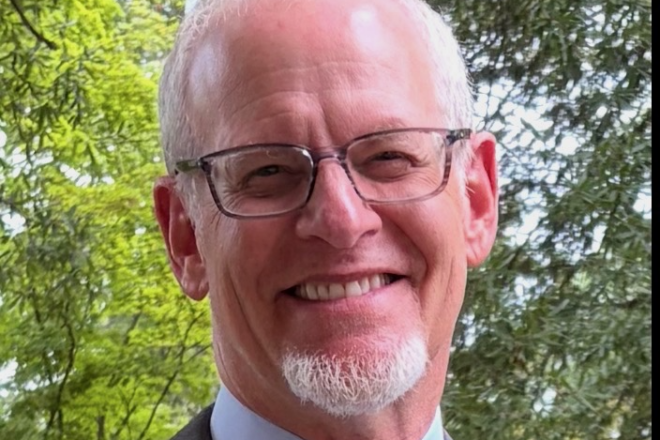
Dr. M’s Women and Children First Podcast #116: Russell Greenfield, MD – The Art of Listening

Welcome back to Dr. M’s Women and Children First.

One of the recurring themes on this podcast is that the future of medicine won’t be discovered through faster-paced healthcare alone. It will be discovered by slowing down, listening more carefully, and embracing a patient-centered approach that seeks to understand the whole person—not just the disease. Ultimately, the future of medicine begins with a better question: How do we truly hear a patient’s story so that we can better serve the person sitting in front of us?

Today’s guest has spent his entire career helping answer that question.

Our conversation today centers on one of the most overlooked aspects of healing: why so many people struggle to begin the healing process in the first place—and more importantly, how we, as clinicians, parents, and patients, can help that process finally move forward.

Dr. Russell Greenfield is a board-certified emergency medicine physician and a Diplomate of the American College of Lifestyle Medicine whose career has been dedicated to transforming healthcare from a disease-centered model into one focused on whole-person health. He has served as Medical Director of Integrative Medicine for major health systems, including Novant Health and the Weisiger Cancer Institute, held national leadership positions within the Veterans Health Administration’s Whole Health Initiative, and continues to advise organizations across the country that are reimagining what healthcare can become.

What makes Dr. Greenfield’s journey especially unique is that he was one of the select physicians chosen to complete a residential fellowship under the mentorship of Dr. Andrew Weil at the University of Arizona—the birthplace of academic integrative medicine. At a time when very few physicians were willing to challenge the traditional boundaries of healthcare, Dr. Greenfield immersed himself in a model that recognized nutrition, movement, sleep, stress, relationships, purpose, and environment as fundamental pillars of health, while embracing the remarkable advances of modern medical science.

For me, this conversation is especially meaningful because many of us in medicine are asking the same question: How do we move upstream? How do we stop waiting for chronic disease to develop and instead create the conditions where health can flourish?

Today we’ll explore the art of becoming an experienced listener in service of the patient before us. We’ll discuss why curiosity often matters more than certainty, why healing frequently begins long before the prescription pad comes out, and how understanding a person’s story can unlock opportunities that laboratory tests and imaging studies alone may never reveal.

Whether you’re a clinician, a parent, or simply someone searching for a deeper understanding of health, I think you’ll come away from this conversation with a renewed appreciation for one of medicine’s most powerful tools: listening.

Enjoy,

Dr. M

Dr. M’s SPA Newsletter Volume 16 Issue 20 – Healthcare Policy

Failing Them

Why Are We?

We are failing our children, the next generation.

I have been spending an inordinate amount of time studying cellular biology and mitochondrial function in order to understand worsening disease trends. Thus, I want to revisit a landmark study that is one of the most comprehensive assessments of pediatric health ever conducted in the United States. Rather than examining a single disease or health outcome, Dr. Forrest and colleagues integrated data from multiple nationally representative surveys, mortality databases, and electronic health records encompassing millions of children to evaluate whether the health of American children has changed over the past 17 years. The answer was strikingly consistent: across virtually every major health domain, children in the United States are becoming less healthy. The investigators examined mortality, chronic physical and mental health conditions, obesity, functional status, sleep, puberty, physical symptoms, and emotional well-being between 2007 and 2023. Nearly every indicator worsened over time.

“From 2007 to 2022, infants (<1 year old) were 1.78 and 1- to 19-year-old individuals were 1.80 times more likely to die in the US than in the OECD18. The 2 causes of death with the largest net difference between the US and OECD18 were prematurity and sudden unexpected infant death for infants 12 months or younger, and firearm-related incidents and motor vehicle crashes for 1- to 19-year-old individuals. From 2011 to 2023, the prevalence of 3- to 17-year-old individuals with a chronic condition rose from 39.9% to 45.7% within PEDSnet, and from 25.8% to 31.0% within the general population. Rates of obesity, early onset of menstruation, trouble sleeping, limitations in activity, physical symptoms, depressive symptoms, and loneliness all increased during the study period.” (Forrest et. al. 2025)… and literature review.

Enjoy,

Dr. M


Dr. M’s Women and Children First Podcast #91 – Vic Gatto, MBA – Elevate Health 2050

I’m thrilled to bring you a conversation with a visionary leader whose work is reshaping healthcare innovation—Vic Gatto.

Vic is the driving force behind Elevate Health 2050, a bold initiative exploring the transformative potential of Web3, AI, and biotech to redefine healthcare’s future, with a special focus on accessibility and impact—areas that touch the lives of women and children every day. Before this, Vic carved his path as the founder and Managing General Partner of Jumpstart Capital, where he’s invested in over 200 early-stage healthcare startups, proving that innovation thrives beyond Silicon Valley’s shadow, right here in Middle America.

Vic’s journey began with a Bachelor of Arts from Amherst College, giving him a broad foundation, followed by a Master of Business Administration from Vanderbilt University’s Owen Graduate School of Management, equipping him with the strategic insight to navigate the complex world of venture capital.

His entrepreneurial roots trace back to the 1990s, when he co-founded a software company in Boston, growing it from a small team to over 250 employees before selling it—a testament to his ability to build from the ground up.

But Vic’s story isn’t just about credentials or exits; it’s about a man who sees healthcare as a mission, not just a market. With Elevate Health 2050, he’s pushing boundaries to ensure that the next generation—our women and children—benefits from cutting-edge solutions tailored to their needs. Today, we’ll explore how his vision bridges technology and human health, and what it means for families everywhere.

So, grab a cup of tea, settle in, and let’s welcome Vic Gatto to the show.

Enjoy,

Dr. M