maternal child health

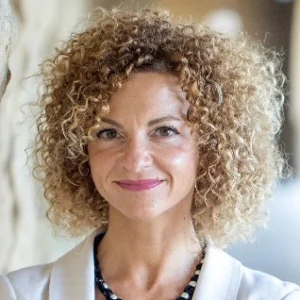
Dr. M’s Women and Children First Podcast #119: Judy Van de Water, PhD –Maternal Autoantibodies and Autism

Welcome to Dr. M’s Women and Children First Podcast, where we explore the science, stories, and ideas that are changing how we understand the health of women and children—with a particular focus on how the earliest environments of life can shape health for decades to come.

Today we are going deep into one of those earliest environments: the immune conversation between a mother and her developing baby.

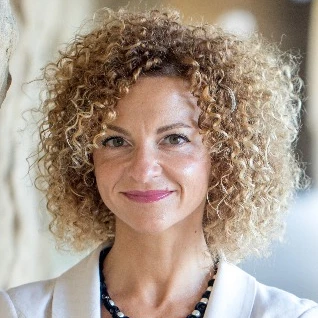
My guest is Dr. Judy Van de Water, an internationally recognized immunologist whose work has helped reshape our understanding of the relationship between maternal immune function, pregnancy, and neurodevelopment.

Dr. Van de Water received her Bachelor of Science in Biological Sciences from the University of California, Davis, in 1978, followed by her PhD in Immunology from UC Davis in 1988. She went on to build her career in clinical immunology and immunopathology and joined the UC Davis Department of Internal Medicine faculty in 1999. She subsequently became part of the newly established UC Davis MIND Institute, where her research increasingly focused on the immunobiology of autism and other neurodevelopmental disorders.

Her laboratory has spent decades investigating a fascinating question:

What happens when the maternal immune system interacts differently with the developing fetal brain?

That work has included the study of maternal cytokines and chemokines, immune dysregulation during pregnancy, environmental influences on immune function, and—perhaps most notably—the discovery and characterization of specific maternal autoantibodies that recognize proteins important to fetal brain development.

This research ultimately helped define what is now known as Maternal Autoantibody-Related Autism, or MAR autism—a biologically defined subtype of autism associated with specific patterns of maternal autoantibodies.

And I think her work raises a much larger question.

What if autism is not one biological condition at all?

What if the behavioral diagnosis we call autism represents a final common pathway reached through multiple biological routes—genetic, metabolic, environmental, inflammatory, immunologic, or some combination of them?

If that is true, identifying those biological subtypes becomes incredibly important.

Because once we understand mechanism, we can begin asking better questions about risk, prediction, prevention, and ultimately more precise care.

Today we’ll talk about how these maternal autoantibodies were discovered, why they develop in some women, what the animal and human studies tell us about causality, the science behind MAR autism and MARAbio, and perhaps the biggest question of all:

If we can identify a biological risk pathway before a child is born, what do we do with that information?

Enjoy,

Dr. M
 

Dr. M’s Women and Children First Podcast #109: Nutrition, Epigenetic Change and Childhood Disease


Nothing in biology is random.
Not growth.
Not metabolism.
Not disease.
What we will explore today is the reality that the earliest inputs in life: nutrition, environment, signaling,
don’t just influence outcomes…
They shape them.
They write the first draft.
And if you understand that, if you truly let that land,
then everything about how we approach pregnancy, childhood, and prevention begins to shift.
From reaction…to intention.
From downstream management…to upstream design.

Why This Conversation Matters
This episode is not just another discussion.
In many ways, it is ground zero.
Because if you don’t understand this layer, the imprinting, the epigenetic programming, the responsiveness of biology to environment, then everything that follows in this podcast…becomes harder to fully see.
But once you do see it, the picture sharpens.
You begin to understand:why trajectories diverge early, why children present so differently and why the same diagnosis can have completely different roots.

This is the beginning of a new map.
And maps matter.

Gratitude to Today’s Guests
I want to take a moment to acknowledge the voices you heard today—because this kind of thinking doesn’t happen by accident.

Lucia Aronica
Dr. Aronica is a Stanford scientist and a global authority in nutritional epigenetics, helping clinicians understand that food is not simply fuel—it is biological information that actively programs gene expression.

She created Stanford’s first courses in nutritional epigenetics and pioneered the Epinutrition framework, a clinical model that reframes nutrition as signaling, not supplementation.

You may recognize her from the Netflix documentary You Are What You Eat: A Twin Experiment, and she is now launching the world’s first Clinical Epinutrition Certification, training health professionals to use food as epigenetic medicine.

Emily Stone Rydbom
Emily is a clinical nutritionist, researcher, and digital health founder working at the frontier of precision maternal nutrition.

As Founder and CEO of GrowBaby Health, and through her work with GrowHealth Technologies, she is building AI-enabled systems that integrate nutrition directly into standard obstetric care. With over 14 years of clinical experience, she has helped pioneer the “Standard of Care PLUS” model, demonstrating meaningful reductions in preterm birth and gestational diabetes in high-risk populations.

She is also a co-investigator on the ROOT Study—bringing this work directly into real-world maternal care here in North Carolina.

Samantha N. Fessler
Dr. Fessler brings a deep scientific lens to the intersection of metabolism, inflammation, and perinatal nutrition.
With a PhD in Exercise and Nutritional Sciences from Arizona State University, her work has focused on how nutritional strategies can modulate the interplay between immune signaling and metabolic function to improve outcomes for mothers and children.

As Director of Scientific Affairs at Needed, she helps translate rigorous science into actionable, evidence-based approaches that clinicians and families can actually use.

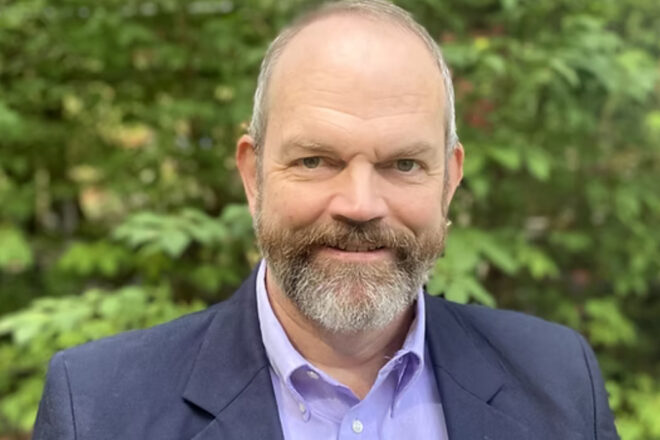
Randy L. Jirtle
And finally, Dr. Randy Jirtle—joining us again—whose work, quite simply, changed how we understand biology.
A pioneer in epigenetics and genomic imprinting, Dr. Jirtle’s research on the agouti mouse model demonstrated for the first time that environmental inputs—particularly nutrition and chemical exposure—could directly alter gene expression across generations. His work reframed the gene from a fixed sentence…to a responsive system.

In fact, Time Magazine once described it this way:“A gene represents less of an inexorable sentence and more of an access point for the environment to modify the genome.”

He is a Professor of Epigenetics at North Carolina State University and Senior Scientist at University of Wisconsin–Madison and remains, at his core, a deeply curious thinker.

And that curiosity… is what moved this field forward.

Final Thought: If there is one takeaway from today, it is this: The environment is not acting on the child. The child is responding to the environment.

And that response…is being written into biology.

Dr. M

Dr. M’s SPA Newsletter Volume 15 Issue 22/23/24 – Acetaminophen and Autism

Review Part III – after the Attia Podcast

After completing the interview with Dr. William Parker and now listening to Peter Attia’s analysis, let us look again at this question. I repeat that the initial question has not changed for me. The first and most fundamental question to ask is this: What is the true value of acetaminophen in health compared with the potential risk if the associated findings are indeed correct?

My response to this question has been altered by the analysis so far.

I love this from Dr. Attia: “Some people might be wondering, why did you just take so long to explain all this to us? Why don’t you just give us the answer? I just want the sound bite, man

Peter’s reply, “If you just want sound bites, you’re never going to learn.”

Honestly, if you just want sound bites, this isn’t the podcast for you. But if you actually want to be able to learn to think for yourself, then that’s what we’re here to do. And that’s the reason we killed ourselves over the past week to put together the most thorough gathering of all the data we could find and the most intense night-weekend analysis possible. “

I agree! I believe that the science and data are key. So here goes – round three!…..

Dr. M


Dr. M’s Women and Children First Podcast #98 William Parker, PhD – Acetaminophen and Autism – What Do We Know in 2025?

Welcome to Dr. M’s Women & Children First Podcast, where we engage with pioneering voices at the intersection of science, healthcare, and the well-being of families.

Today, I’m honored to introduce Dr. William Parker, PhD. Dr. Parker is perhaps best known for discovering the function of the human appendix, but his contributions to science extend far beyond that single discovery. He studied biology and chemistry as an undergraduate before earning his PhD in Chemistry from the University of Nebraska–Lincoln in 1992. Since the 1980s, he has conducted innovative research, publishing more than 150 peer-reviewed articles that span immune function, microbiome science, and human health.

Dr. Parker was the first to compare immune systems in wild animals with those of their laboratory counterparts, and among the first to conclude that changes in the human “biota”, the symbiotic organisms living within us, brought on by modern society can contribute to depression and anxiety. After nearly three decades at Duke University, where he served as associate professor and research leader, he founded WPLab, Inc., a nonprofit dedicated to understanding and educating about the causes of chronic inflammatory diseases in high-income societies.

Currently a visiting scholar at the University of North Carolina, Dr. Parker collaborates widely with colleagues from Duke University, University of Montreal, Czech Academy of Sciences, University of Groningen, University of Colorado Boulder, and scientists across the pharmaceutical industry.

In recent years, he has turned his attention to a provocative and urgent question: the potential links between early acetaminophen exposure and autism spectrum outcomes. His current work combines mechanistic and epidemiologic approaches to explore how acetaminophen’s effects on human physiology at critical stages of development might influence neurodevelopment.

In our conversation, we’ll explore:

  • The evidence and hypotheses behind acetaminophen’s potential role in autism risk
  • What families and clinicians should know: what’s plausible, what remains speculative, and where research is heading next

I’m thrilled to share this episode with Dr. Parker, whose intellectual curiosity, scientific rigor, and courage to ask difficult questions embody the spirit of this show.

Dr. M

Dr. M’s SPA Newsletter Volume 15 Issue 18

Breastmilk is Dynamic

Cellular and transcriptional diversity over the course of human lactation

This recent 2022 paper in the Proceedings of the National Academy of Sciences by Dr. Nyqiust and colleagues is a site for sore eyes.

It offers a remarkable, high-resolution portrait of how the cellular landscape of human breast milk (hBM) shifts over time. The authors capture something both scientifically rich and uniquely human: the dynamic, living composition of milk as it adapts to the changing needs of mother and child.

The abstract: “Human breast milk is a dynamic fluid that contains millions of cells, but their identities and phenotypic properties are poorly understood. We generated and analyzed single-cell RNA-sequencing (scRNA-seq) data to characterize the transcriptomes of cells from hBM across lactational time from 3 to 632 d postpartum in 15 donors. We found that the majority of cells in hBM are lactocytes, a specialized epithelial subset, and that cell-type frequencies shift over the course of lactation, yielding greater epithelial diversity at later points. Analysis of lactocytes reveals a continuum of cell states characterized by transcriptional changes in hormone-, growth factor-, and milk production-related pathways. Generalized additive models suggest that one subcluster, LC1 epithelial cells, increases as a function of time postpartum, daycare attendance, and the use of hormonal birth control. We identify several subclusters of macrophages in hBM that are enriched for tolerogenic functions, possibly playing a role in protecting the mammary gland during lactation. Our description of the cellular components of breast milk, their association with maternal–infant dyad metadata, and our quantification of alterations at the gene and pathway levels provide a detailed longitudinal picture of hBM cells across lactational time. This work paves the way for future investigations of how a potential division of cellular labor and differential hormone regulation might be leveraged therapeutically to support healthy lactation and potentially aid in milk production.” (Nyquist et. al. 2022)

And more information on breastmilk immunology and a recipe.

Dr. M

Dr. M’s SPA Newsletter Volume 15 Issue 15

Systemic Maternal Inflammation and Neurodevelopment: The Role of IL-6 and IFN-γ in Autism Spectrum Disorder

I just returned from Estes Park, Colorado where I presented a lecture on the Growing Brain/Mind – a tour through the underpinnings of childhood neurological changes that we call Autism. The timing is perfect for this article to be written.

In an era when chronic disease in children is rising at an unprecedented pace, the search for root causes must include an honest inquiry into the conditions present during fetal development. The review article by Majerczyk and colleagues, Systemic Maternal Inflammation Promotes ASD via IL-6 and IFN-γ, brings forward a critical piece in this puzzle that I began to explore a few years ago when writing a book. It connects the dots between maternal immune dysregulation and long-term neurodevelopmental outcomes, specifically autism spectrum disorder (ASD). Through a synthesis of clinical data and animal research, the authors make a compelling case for the centrality of two inflammatory messengers, interleukin-6 (IL-6) and interferon-gamma (IFN-γ), in shaping fetal brain development during gestational stress. The key words here being GESTATIONAL STRESS, the recurring scientific theme for ASD development, not vaccines… and some literature reviews.

Dr. M

Dr. M’s Women and Children First Podcast #94 – Melinda Elliott, MD – Feeding the Infants

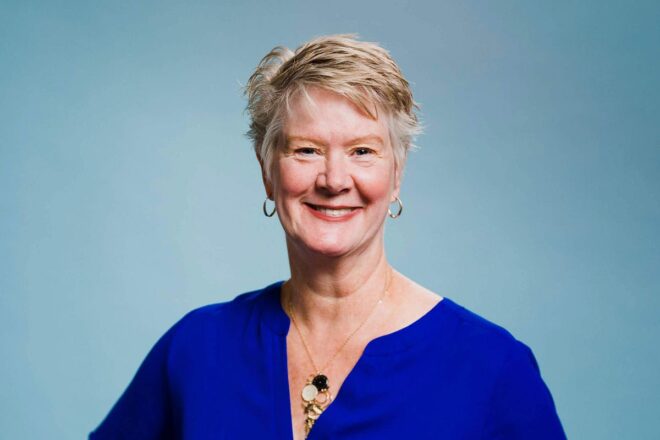
Today, we explore the intersections of cutting-edge science, compassionate care, and the future of pediatric and maternal health with Dr. Melinda Elliott, MD, FAAP, a leading neonatologist and the Chief Medical Officer at Prolacta Bioscience. Dr. Elliott has dedicated her career to advancing the care of our most vulnerable patients, premature and medically fragile infants, through both clinical excellence and research-driven innovation.

Dr. Elliott earned her medical degree from West Virginia University School of Medicine. She went on to complete her residency in pediatrics and her fellowship in neonatal-perinatal medicine at the University of Florida, where she also served as chief resident and a faculty member, helping to train the next generation of pediatricians and neonatologists.

Throughout her clinical and leadership career, Dr. Elliott has been deeply involved in advancing evidence-based care in the NICU, improving nutritional strategies for preterm infants, and advocating for human milk as a therapeutic intervention in neonatal health. Her work with Prolacta Bioscience supports NICUs around the globe in providing 100% human milk–based nutrition to reduce complications such as necrotizing enterocolitis (NEC), a devastating condition that disproportionately affects preterm infants.

Please join me in welcoming Dr. Melinda Elliott, a champion for babies and a voice for innovation in neonatal medicine.

Dr. M

1 2 … 6