Podcast: Play in new window | Download
Nothing in biology is random.
Not growth.
Not metabolism.
Not disease.
What we will explore today is the reality that the earliest inputs in life: nutrition, environment, signaling,
don’t just influence outcomes…
They shape them.
They write the first draft.
And if you understand that, if you truly let that land,
then everything about how we approach pregnancy, childhood, and prevention begins to shift.
From reaction…to intention.
From downstream management…to upstream design.
Why This Conversation Matters
This episode is not just another discussion.
In many ways, it is ground zero.
Because if you don’t understand this layer, the imprinting, the epigenetic programming, the responsiveness of biology to environment, then everything that follows in this podcast…becomes harder to fully see.
But once you do see it, the picture sharpens.
You begin to understand:why trajectories diverge early, why children present so differently and why the same diagnosis can have completely different roots.
This is the beginning of a new map.
And maps matter.
Gratitude to Today’s Guests
I want to take a moment to acknowledge the voices you heard today—because this kind of thinking doesn’t happen by accident.
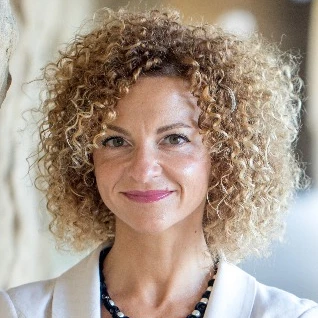
Lucia Aronica
Dr. Aronica is a Stanford scientist and a global authority in nutritional epigenetics, helping clinicians understand that food is not simply fuel—it is biological information that actively programs gene expression.
She created Stanford’s first courses in nutritional epigenetics and pioneered the Epinutrition framework, a clinical model that reframes nutrition as signaling, not supplementation.
You may recognize her from the Netflix documentary You Are What You Eat: A Twin Experiment, and she is now launching the world’s first Clinical Epinutrition Certification, training health professionals to use food as epigenetic medicine.
Emily Stone Rydbom
Emily is a clinical nutritionist, researcher, and digital health founder working at the frontier of precision maternal nutrition.
As Founder and CEO of GrowBaby Health, and through her work with GrowHealth Technologies, she is building AI-enabled systems that integrate nutrition directly into standard obstetric care. With over 14 years of clinical experience, she has helped pioneer the “Standard of Care PLUS” model, demonstrating meaningful reductions in preterm birth and gestational diabetes in high-risk populations.
She is also a co-investigator on the ROOT Study—bringing this work directly into real-world maternal care here in North Carolina.
Samantha N. Fessler
Dr. Fessler brings a deep scientific lens to the intersection of metabolism, inflammation, and perinatal nutrition.
With a PhD in Exercise and Nutritional Sciences from Arizona State University, her work has focused on how nutritional strategies can modulate the interplay between immune signaling and metabolic function to improve outcomes for mothers and children.
As Director of Scientific Affairs at Needed, she helps translate rigorous science into actionable, evidence-based approaches that clinicians and families can actually use.
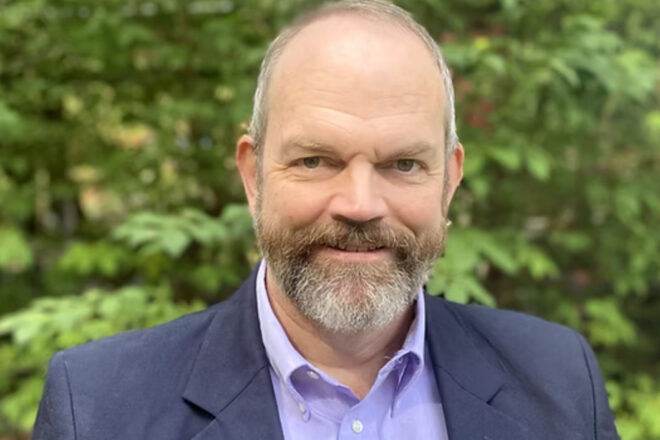
Randy L. Jirtle
And finally, Dr. Randy Jirtle—joining us again—whose work, quite simply, changed how we understand biology.
A pioneer in epigenetics and genomic imprinting, Dr. Jirtle’s research on the agouti mouse model demonstrated for the first time that environmental inputs—particularly nutrition and chemical exposure—could directly alter gene expression across generations. His work reframed the gene from a fixed sentence…to a responsive system.
In fact, Time Magazine once described it this way:“A gene represents less of an inexorable sentence and more of an access point for the environment to modify the genome.”
He is a Professor of Epigenetics at North Carolina State University and Senior Scientist at University of Wisconsin–Madison and remains, at his core, a deeply curious thinker.
And that curiosity… is what moved this field forward.
Final Thought: If there is one takeaway from today, it is this: The environment is not acting on the child. The child is responding to the environment.
And that response…is being written into biology.
Dr. M