
mental

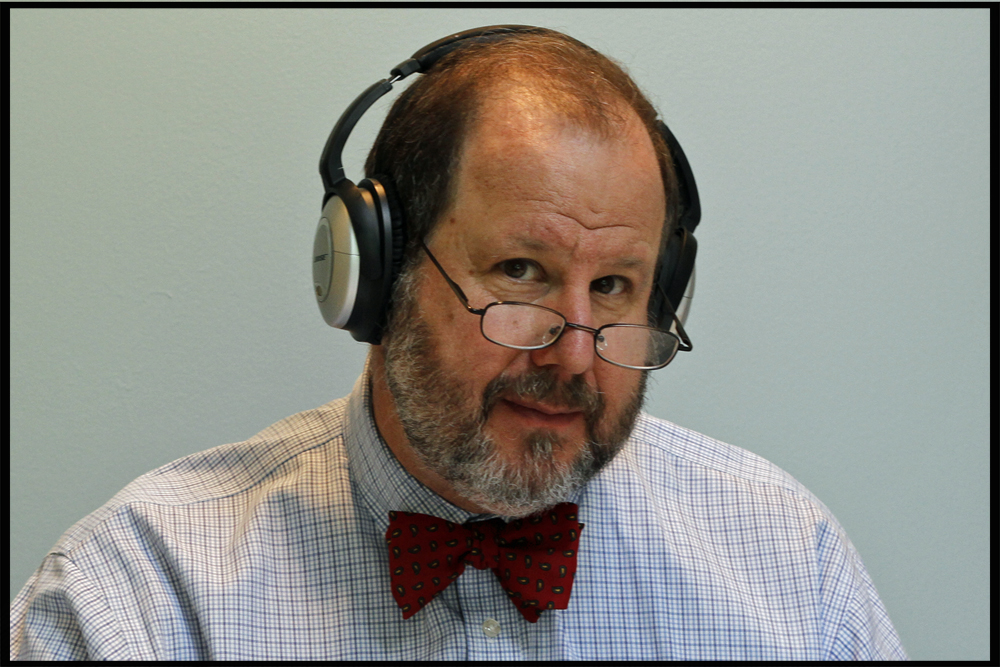
Dr. M’s Women and Children First Podcast #111: Duey Freeman, MA – Attachment


Welcome back to Dr. M’s Women and Children First. Today’s conversation moves into one of the deepest layers of human development: attachment, relationship, and the way early experiences shape the architecture of our emotional lives.

My guest today is Duey Freeman, a licensed therapist, teacher, mentor, and internationally respected voice in attachment theory, human development, and relational psychology. Duey has spent decades teaching therapists, graduate students, and helping professionals around the world, developing a practical framework for understanding how connection, or the absence of it, shapes the nervous system, identity, and the capacity for intimacy.

He has logged nearly 80,000 direct clinical hours and co-founded both the Gestalt Equine Institute and the Gestalt Institute of the Rockies.

What makes Duey’s work unique, and it is unique, is that he does not approach attachment as a sterile academic theory. He approaches it as lived human experience. His work centers on a simple but profound truth: what is injured in relationship is often only healed in relationship.

In this episode, we explore how attachment patterns emerge in childhood, how they quietly shape adult relationships, parenting, stress physiology, and even our sense of safety in the world. We discuss the roots of attachment theory through the work of John Bowlby and Mary Ainsworth, and we move into modern concepts involving trauma, nervous system regulation, emotional attunement, and relational repair.

We also touch on an uncomfortable reality in modern culture: many people are surrounded by communication yet starving for authentic connection. Children especially do not simply need instruction or behavioral management. They need co-regulation, attunement, eye contact, emotional presence, and secure relational anchors.

This conversation is not just for therapists. It is for parents, physicians, educators, coaches, and anyone trying to understand why humans behave the way they do under stress, conflict, intimacy, or loss.

Duey brings an unusual combination of wisdom, groundedness, tenderness, and clinical depth to this discussion. I have heard him frequently called Yoda, and if you knew him, you would immediately understand and agree with that moniker. You can feel that he has spent a lifetime studying not just psychology, but people.

So sit back and enjoy this remarkable conversation with Duey Freeman on attachment, psychology, and the relational foundations of being human.

Dr. M

Dr. M’s SPA Newsletter Audiocast Volume 14 Issue 13

To Forgive
The act as defined as I see it – to release consciously another person from your negative feelings based on an event that was hurtful toward you from them whether it is perceived on your part or known by both parties.
What I find fascinating is that often the act of forgiveness may have to push past an unconscious threat injury in order to take root. This is to say that we can be harmed at a conscious and an unconscious level. The unconscious harm is understood at the vagal nerve level which is a primitive emotional safety response state that all mammals have that developed a long time ago. This is the essence of polyvagal theory which states that when humans feel safe, their nervous system supports the homeostatic functions of health, growth and restoration, while simultaneously become accessible to others without feeling or expressing threat and vulnerability. (Porges S. 2022) Thus, the opposite exists, when humans are threatened, their nervous system supports a break in homeostasis that can be short lived or long persistent based on the severity and chronicity of the harm. This break can lead to persistent mental and physical health challenges….. and a section on sleep followed by the recipe of the week.
Enjoy,
Dr. M
Dr. M’s SPA Newsletter Audiocast Volume 14 Issue 10

APOE4 and the history of human disease
Apolipoprotein E, discovered in 1973, is derived from a polymorphic gene called ApoE that encodes for a signaling protein on a class of fatty proteins that primarily carry cholesterol and other molecules around the body. We find ApoE primarily on VLDL, very low-density lipoproteins and HDL, High density lipoproteins. It primarily helps to shuttle cholesterol from the periphery of the body back to the liver. ApoE proteins are also involved in neuronal signaling, neuroinflammation and glucose metabolism making them especially critical for brain activity. This is becoming a critical part of the story for understanding dementia and neurodegeneration. (Williams T. 2020) ApoE is most famous for an isoform, APOE4/4, being highly associated with Alzheimer’s dementia in modernity. Unfortunately, as we do with many things in medicine, we have been focused on this genetic protein variant as a net negative in humans because we look at things as black and white. Either good or bad. A binary choice. Rubish! …..
Enjoy,
Dr. M