
Parent Health and Wellbeing

Dr. M’s Women and Children First Podcast #112: Mona Delahooke, PhD – Beyond Behaviors


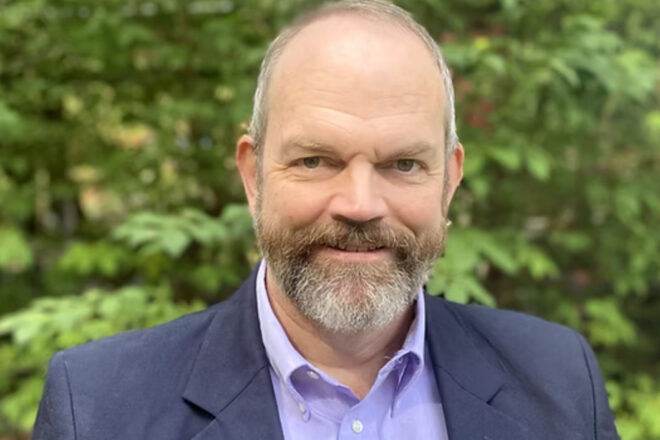
Today on Dr. M’s Women and Children First, we welcome one of the most important voices in modern child development and behavioral science, Mona Delahooke.

Dr. Delahooke is a licensed clinical psychologist, internationally recognized speaker, and the author of groundbreaking books including Beyond Behaviors and Brain-Body Parenting. Her work challenges one of the deepest assumptions in modern parenting and education: that difficult behaviors are simply choices to be corrected. Instead, she invites us to ask a radically different question, what is the nervous system trying to communicate?

This conversation sits right at the crossroads of neuroscience, attachment theory, polyvagal theory, developmental psychology, and the lived experience of parenting. In many ways, Mona’s work gives language to something clinicians and parents often feel intuitively but struggle to articulate: behavior is not merely compliance or defiance, behavior is biology expressed through the body.

We explore how stress physiology, early attachment, sensory processing, trauma, neurodivergence, and autonomic nervous system states shape the way children interact with the world around them. We discuss why punishment-based models often fail vulnerable children, how “bad behavior” may actually represent adaptive survival responses, and why safety and connection are foundational to learning, resilience, and emotional regulation.

For me personally, this conversation resonates deeply with the broader themes we often discuss on this podcast, the interaction between environment, physiology, immune health, metabolism, and neurodevelopment. Mona helps bridge the gap between cellular stress and relational stress, between body and mind, between physiology and behavior.

If you’ve ever cared for a child with anxiety, ADHD, autism, sensory challenges, explosive behavior, school struggles, or chronic dysregulation, this episode offers both compassion and a fundamentally different framework. One that moves away from blame and toward curiosity. Away from control and toward connection.

This is a conversation about seeing children more clearly. And perhaps, seeing ourselves more clearly too.

Please enjoy this conversation with Dr. Mona Delahooke.

Dr. M

Dr. M’s Women and Children First Podcast #111: Duey Freeman, MA – Attachment


Welcome back to Dr. M’s Women and Children First. Today’s conversation moves into one of the deepest layers of human development: attachment, relationship, and the way early experiences shape the architecture of our emotional lives.

My guest today is Duey Freeman, a licensed therapist, teacher, mentor, and internationally respected voice in attachment theory, human development, and relational psychology. Duey has spent decades teaching therapists, graduate students, and helping professionals around the world, developing a practical framework for understanding how connection, or the absence of it, shapes the nervous system, identity, and the capacity for intimacy.

He has logged nearly 80,000 direct clinical hours and co-founded both the Gestalt Equine Institute and the Gestalt Institute of the Rockies.

What makes Duey’s work unique, and it is unique, is that he does not approach attachment as a sterile academic theory. He approaches it as lived human experience. His work centers on a simple but profound truth: what is injured in relationship is often only healed in relationship.

In this episode, we explore how attachment patterns emerge in childhood, how they quietly shape adult relationships, parenting, stress physiology, and even our sense of safety in the world. We discuss the roots of attachment theory through the work of John Bowlby and Mary Ainsworth, and we move into modern concepts involving trauma, nervous system regulation, emotional attunement, and relational repair.

We also touch on an uncomfortable reality in modern culture: many people are surrounded by communication yet starving for authentic connection. Children especially do not simply need instruction or behavioral management. They need co-regulation, attunement, eye contact, emotional presence, and secure relational anchors.

This conversation is not just for therapists. It is for parents, physicians, educators, coaches, and anyone trying to understand why humans behave the way they do under stress, conflict, intimacy, or loss.

Duey brings an unusual combination of wisdom, groundedness, tenderness, and clinical depth to this discussion. I have heard him frequently called Yoda, and if you knew him, you would immediately understand and agree with that moniker. You can feel that he has spent a lifetime studying not just psychology, but people.

So sit back and enjoy this remarkable conversation with Duey Freeman on attachment, psychology, and the relational foundations of being human.

Dr. M

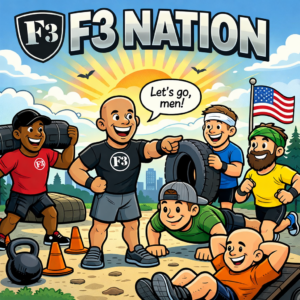
Dr. M’s Women and Children First Podcast #110: F3 Nation and Fatherhood


Welcome to Dr. M’s Women and Children First Podcast. Today’s conversation is a little different.

Six men. One table. No scripts.

Just a shared commitment to something that doesn’t come with a manual—fatherhood.

We’re talking about what it means to show up as a dad when you’re tired, when you’re stretched thin, and when the stakes feel higher than anything else you do.

And we’re grounding that conversation in the ethos of F3 Nation—fitness, fellowship, and faith—where men gather early, push each other physically, and, more importantly, build something deeper: accountability, purpose, and community.
Because strong fathers don’t happen by accident. They’re forged—day by day, rep by rep, conversation by conversation.

Let’s get into it.
Dr. M

Dr. M’s SPA Newsletter Volume 16 Issue 9 – Leadership


Brene Brown – Leadership

Tools to Teach Your Children and SELF

“Stand firmly enough to lead, loosely enough to listen.”

Strong Ground by Brené Brown published in 2025

Breaking down this new book by the excellent Brene Brown, we find that strong leaders don’t eliminate tension or risk. They hold it. And this is key! What does the hold look like? How does it show up to the team?

The theme in my mind is “toughness with tenderness”

Clarity is kindness. Vagueness is avoidance dressed as politeness.
You can be both confident and uncertain. That’s not weakness, it’s reality.
Values are not what you believe. They’re what you do under pressure.
Most leadership failures are emotional avoidance, not strategic failure.
Accountability without empathy is cruelty. Empathy without accountability is chaos.
People don’t disengage because work is hard, they disengage because trust erodes.
The goal is not control. The goal is grounded presence in uncertainty.
You can’t build brave cultures with armored leaders.
Paradox is not a problem to solve, it’s a condition to manage.
If you’re always comfortable, you’re not leading. You’re maintaining.

I especially, like the last one. Discomfort is the path to growth in all things. Think euthermia for temperature, not a recipe for human cellular health or plants for that matter. Temperature through environmental swings are keys to protein elaboration for handling the cold and the heat. The lack of swing equates to a lack of adaptability…. and a piece on the Stakeholder.

Dr. M

Dr. M’s SPA Newsletter Volume 15 Issue 30 – Beyond Behaviors Part 2, Mona Delahooke, PhD

Review of Chapter 2 of Beyond Behaviors
by Mona Delahooke, PhD


“Social behavior and the capacity to manage challenge are dependent on the neural regulation of physiological state.” S. Porges

Top Down or Bottom Up?

“Before We Respond to Behavior, We Need to Understand Its Origin.”

With a deceptively simple observation, Dr. Delahooke reshapes the entire field of behavioral intervention: children’s actions come from two very different places in the brain. Some behaviors are top-down, intentional, planned, thoughtful. But many, especially the ones adults find most perplexing, arise bottom-up from stress responses generated by the body’s autonomic nervous system. We often think of this state in terms of fight or flight, however, it is not that simplistic. It is truly any significant response to the outside environment that leads to a neuroceptive reaction that is not governed by the neocortex, top down. If we don’t distinguish the source, our interventions are guesswork at best and often counterproductive at worst.

She illustrates this through a case, a child whose impulsive, disruptive behaviors were treated as failures of will or desire. School teachers and teams repeatedly urged him to “use his words,” as though language were a faucet he simply refused to turn on. What no one stopped to ask was the foundational question: Was his nervous system regulated enough to access language at all? Was he gated at the level of the amygdala blocking the ability to use his mind consciously and even have the opportunity to respond to a meaningful request? Is he capable of the ask, not in terms of willingness, but in terms of physiological access to the skill itself?
….. and more

Enjoy,
Dr. M

Dr. M’s Women and Children First Podcast #102: Jeremy Goldberg – Life Begins


This weeks Guest is Dr. Jeremy Goldberg. He styles himself as a compassion cultivating day making change agent/empathy collecting not quitting word wizard/chief burrito appreciator aspiring to inspire/struggle overcoming ranter in charge/ferocious idealist/never giver upper/a love bombing kindness pirate. What he really does, in my mind, is write and teach the world to project love and kindness where it is not layered enough. On his website he writes: My mission is to make kindness cool, empathy popular, and compassion commonplace. As part of that purpose, I write articles, send emails, host retreats and workshops, give TEDx talks, coach clients, host a podcast, write books, and make spoken word poetry videos. My name is Jeremy, I founded Long Distance Love Bombs, and I am fucking stoked to meet you. Send me an email and let’s get going: LongDistanceLoveBombs at gmail dot com. We breakdown words, relationship, connection and being happy in a world of silly tribal divisiveness!

In this conversation we discuss his experience as a new father and the initiation of fatherhood. “I have been wiped out and annihilated by parenting and the initiation of fatherhood. Hands down, brutally, face dragged along the hot coals of the initiation….” There are so many real, honest, open truths dropped along the winding road of this discussion. If you are young and ready to understand the world of fatherhood, this is a conversation for you!

Dr. M

Dr. M’s Women and Children First Podcast #98 William Parker, PhD – Acetaminophen and Autism – What Do We Know in 2025?

Welcome to Dr. M’s Women & Children First Podcast, where we engage with pioneering voices at the intersection of science, healthcare, and the well-being of families.

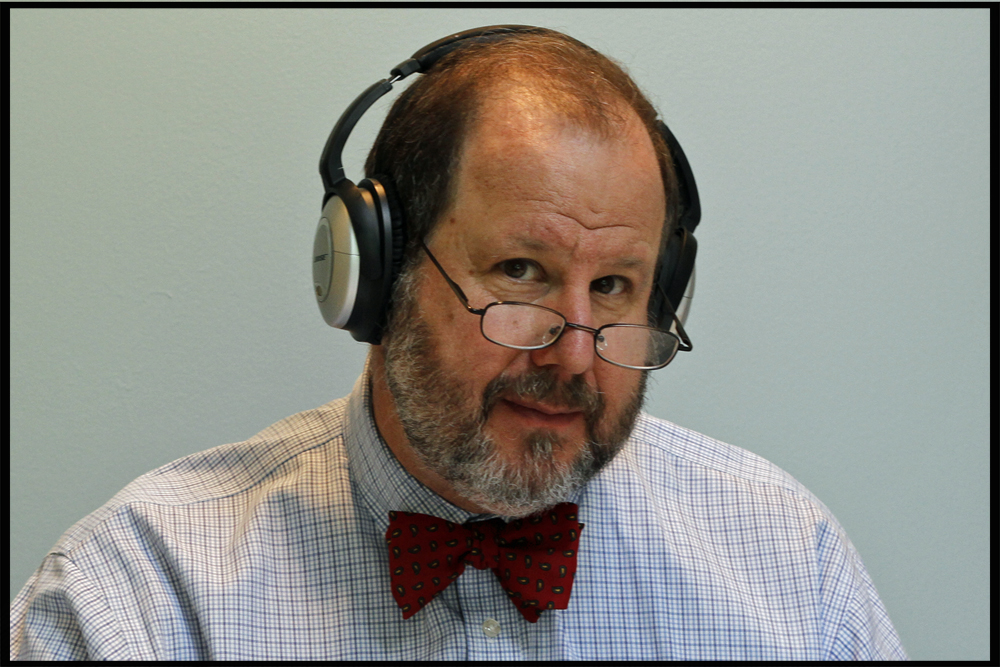
Today, I’m honored to introduce Dr. William Parker, PhD. Dr. Parker is perhaps best known for discovering the function of the human appendix, but his contributions to science extend far beyond that single discovery. He studied biology and chemistry as an undergraduate before earning his PhD in Chemistry from the University of Nebraska–Lincoln in 1992. Since the 1980s, he has conducted innovative research, publishing more than 150 peer-reviewed articles that span immune function, microbiome science, and human health.

Dr. Parker was the first to compare immune systems in wild animals with those of their laboratory counterparts, and among the first to conclude that changes in the human “biota”, the symbiotic organisms living within us, brought on by modern society can contribute to depression and anxiety. After nearly three decades at Duke University, where he served as associate professor and research leader, he founded WPLab, Inc., a nonprofit dedicated to understanding and educating about the causes of chronic inflammatory diseases in high-income societies.

Currently a visiting scholar at the University of North Carolina, Dr. Parker collaborates widely with colleagues from Duke University, University of Montreal, Czech Academy of Sciences, University of Groningen, University of Colorado Boulder, and scientists across the pharmaceutical industry.

In recent years, he has turned his attention to a provocative and urgent question: the potential links between early acetaminophen exposure and autism spectrum outcomes. His current work combines mechanistic and epidemiologic approaches to explore how acetaminophen’s effects on human physiology at critical stages of development might influence neurodevelopment.

In our conversation, we’ll explore:

  • The evidence and hypotheses behind acetaminophen’s potential role in autism risk
  • What families and clinicians should know: what’s plausible, what remains speculative, and where research is heading next

I’m thrilled to share this episode with Dr. Parker, whose intellectual curiosity, scientific rigor, and courage to ask difficult questions embody the spirit of this show.

Dr. M

1 2 6